
What's Happening?
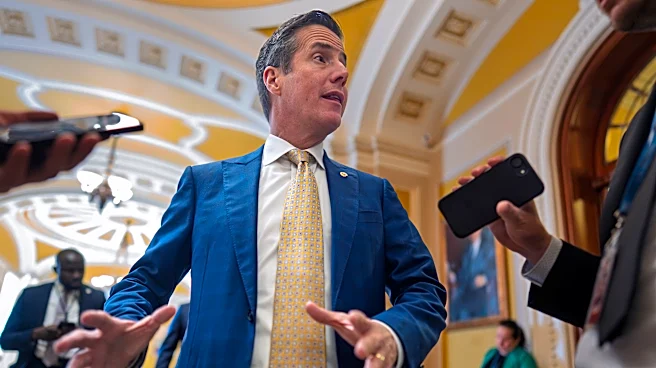
Theaster Gates, a prominent contemporary artist and ceramicist, has acquired Pickard China, the last remaining fine china manufacturer in the United States. The factory, located near Chicago, has been
in operation since 1893 and has historically supplied prestigious clients including the White House and U.S. embassies. The acquisition comes as Pickard China has faced a long decline in output, currently operating at about a quarter of its peak 1970s production levels, and is in urgent need of repairs and upgrades. Gates, known for his work in restoring and repurposing defunct buildings and businesses, plans to guide the company's creative strategy while building a team to manage daily operations. Andy Pickard Morgan, a fourth-generation family member, will remain in an executive role. The move is seen as an effort to preserve American artisanal manufacturing and inject new artistic vision into the struggling industry.
Why It's Important?
This acquisition is significant for several reasons. Firstly, it represents a critical effort to preserve a piece of American manufacturing heritage. The fine china industry in the U.S. has largely disappeared due to escalating manufacturing costs and a shift towards more casual lifestyles, making Pickard China's survival unique. Gates's involvement could revitalize the company, potentially creating new jobs and maintaining specialized craft skills that are otherwise at risk of being lost. Secondly, it highlights a growing trend of artists and cultural figures engaging in economic development and industrial preservation, blurring the lines between art, business, and social impact. This could serve as a model for other struggling heritage industries. Lastly, the acquisition by a figure like Gates, who has a track record of successful urban revitalization projects, suggests a potential for innovative business models that prioritize legacy and community over pure profit, offering a different approach to corporate turnarounds.
What's Next?
The immediate next steps for Pickard China under Theaster Gates's ownership will involve addressing the factory's urgent need for repairs, including a new roof and HVAC system. Gates plans to assemble a team to manage the company's daily operations, while he focuses on creative direction. Andy Pickard Morgan will continue in an executive capacity, ensuring a degree of continuity and institutional knowledge. It is anticipated that Gates will integrate his artistic vision into Pickard's products, potentially expanding into new lines or collaborations, similar to his previous work with Prada. The long-term success will depend on whether Gates can effectively balance the preservation of traditional craftsmanship with innovative artistic and business strategies to re-engage a contemporary market for fine china.
Beyond the Headlines
Beyond the immediate business implications, this acquisition touches upon deeper cultural and ethical dimensions. It raises questions about the value society places on traditional craftsmanship and local manufacturing in an increasingly globalized and automated world. Gates's commitment to preserving the company, rather than allowing it to be sold to a turnaround firm that might prioritize layoffs or outsourcing, underscores an ethical stance on industrial legacy and worker welfare. The integration of an artist's perspective into a manufacturing business could also challenge conventional notions of what constitutes 'art' and 'industry,' potentially leading to new forms of cultural production and consumption. This venture could inspire a broader re-evaluation of how heritage industries can be sustained and reimagined through creative leadership and community-focused investment.