



What's Happening?
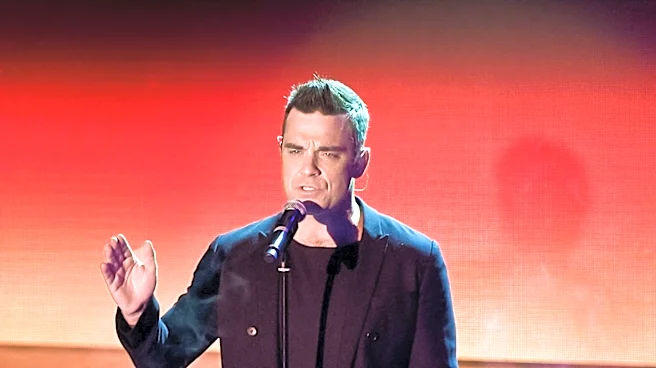
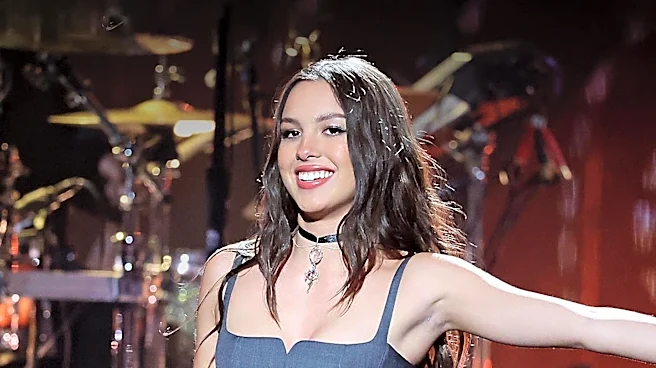
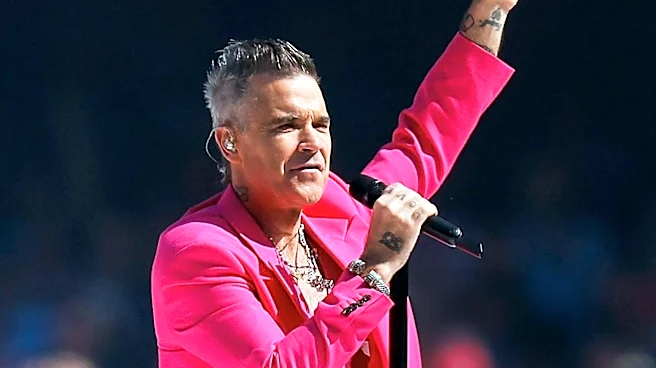
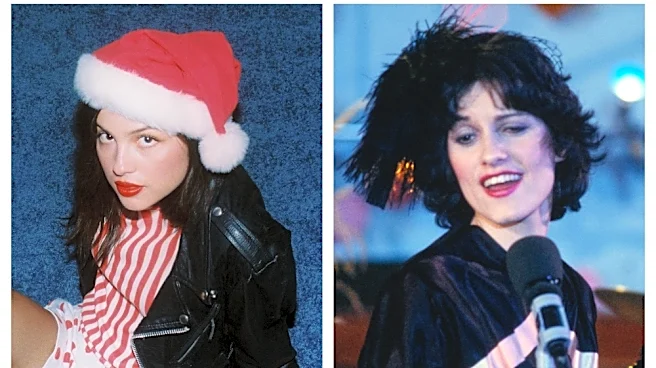
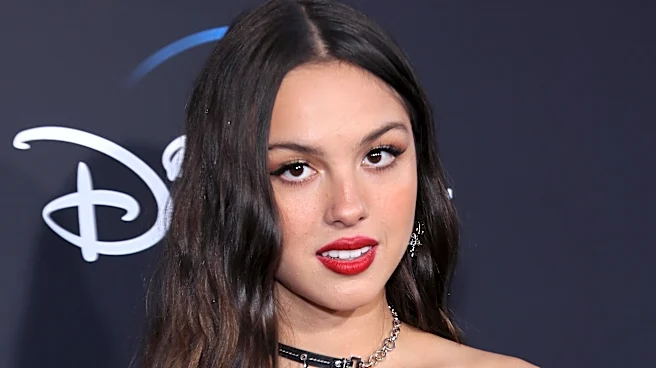
Robbie Williams has publicly defended Olivia Rodrigo against accusations that her new holiday single, 'Take Me Home (4 Christmas),' copied his 2012 hit 'Candy.' Fans on social media had drawn comparisons between the two songs, leading to claims of plagiarism.
Williams, in a statement posted on Instagram on November 9, expressed his admiration for Rodrigo and stated he 'couldn't care less' about the similarities. He acknowledged that Rodrigo might have 'accidentally stumbled across a musical echo' of his song but emphasized that he is not interested in pursuing any publishing or copyright issues. This defense comes amidst previous instances where Rodrigo's songs have faced comparisons to other artists' works, such as Paramore's 'Misery Business' and Taylor Swift's 'Cruel Summer.'
Why It's Important?
This incident highlights the ongoing debate surrounding musical originality, inspiration, and potential copyright infringement in the music industry. While some similarities in music can be coincidental or fall under common musical tropes, accusations of copying can significantly impact an artist's reputation and career. Robbie Williams's public stance is notable because it de-escalates a potentially contentious situation, preventing a legal dispute and fostering a more supportive environment among artists. His defense also underscores the subjective nature of musical influence versus direct copying, a line that often becomes blurred in public perception and fan discussions. Such situations can influence how artists approach songwriting and how the industry addresses intellectual property in an era of widespread musical access and influence.
What's Next?
Robbie Williams's clear statement is likely to quell the immediate fan-driven controversy surrounding the alleged similarities between his song and Olivia Rodrigo's. It is improbable that any legal action will be pursued by Williams, given his explicit declaration of disinterest in the matter. However, the broader conversation about musical influence and originality will likely continue, especially as Rodrigo has faced similar accusations in the past. This event may encourage other artists to be more vocal in defending peers against such claims or, conversely, to be more cautious in their creative processes. The focus will now likely shift back to the reception of Rodrigo's new holiday single and her ongoing musical career.
Beyond the Headlines
The recurring nature of plagiarism accusations against popular artists like Olivia Rodrigo points to a deeper cultural phenomenon within music fandoms and the broader public. In an age where vast catalogs of music are easily accessible, listeners are quick to identify perceived similarities, often leading to online debates and accusations. This trend raises questions about the pressure on contemporary artists to be entirely original while operating within established musical genres and structures. It also highlights the role of social media in amplifying such discussions, sometimes without a full understanding of music theory or copyright law. The incident also subtly touches upon the generational dynamics in music, where newer artists are often scrutinized against the backdrop of established works, prompting discussions about artistic evolution versus imitation.