




What's Happening?
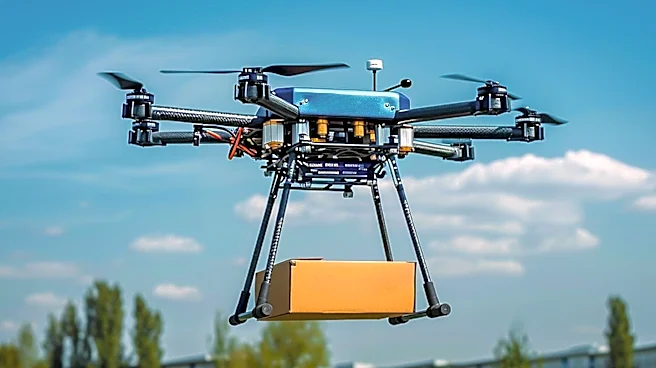
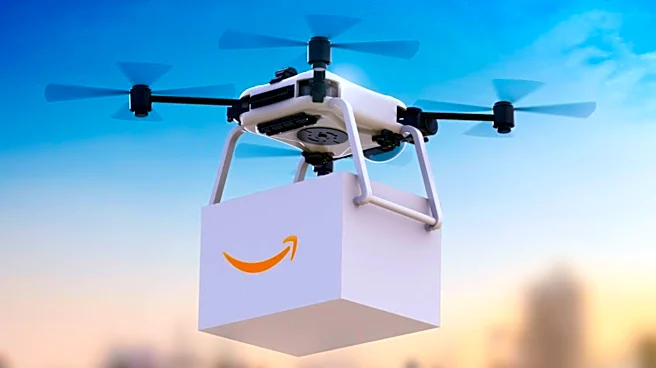
Amazon announced plans to expand its Prime Air drone delivery service to nearly 500 cities and towns across the United States by the end of the year. This expansion represents a sixfold increase from its current operational footprint. The company's Vice
President of Prime Air, David Carbon, projected earlier this year that Prime Air aims to complete 1 million deliveries in 2026, and Amazon has already made hundreds of thousands of deliveries, with thousands occurring daily. This move signals significant momentum for a project that has faced regulatory delays, staff cuts, technical challenges, and community pushback since its initial vision was laid out by founder Jeff Bezos almost 13 years ago. Amazon received a critical regulatory approval in 2024 to conduct long-range drone deliveries and has since expanded beyond its initial markets near Dallas and Phoenix to 11 metro areas, with six more locations soon to be added.
Why It's Important?
This ambitious expansion of Amazon's drone delivery service is important for several reasons. Firstly, it signifies a major step forward in the commercialization of drone technology for logistics, potentially revolutionizing last-mile delivery across the US. If successful, it could set a new standard for speed and efficiency in e-commerce, putting pressure on competitors to adopt similar technologies. Secondly, the projected 1 million deliveries for the year indicate a growing scale and operational capability, moving drone delivery from a niche experiment to a more mainstream service. This could lead to significant cost savings for Amazon in the long run by reducing reliance on traditional delivery methods. Thirdly, the expansion will likely create new job opportunities in drone operations, maintenance, and related support services. However, it also raises concerns among communities regarding drone noise, privacy, and potential impacts on property values, which could lead to increased local regulations and public discourse on the integration of autonomous delivery systems into urban and suburban environments.
What's Next?
In the coming months, Amazon will focus on implementing its expansion plans, which will involve establishing new operational hubs and navigating local regulations in nearly 500 US cities and towns. The company will likely continue to address community concerns regarding noise and privacy to ensure smoother integration of its drone fleet. Competitors in the logistics and e-commerce sectors will be closely monitoring Amazon's progress, potentially accelerating their own drone delivery initiatives or exploring alternative autonomous delivery solutions. Regulatory bodies, including the FAA, may face increased pressure to develop more comprehensive frameworks for drone operations as the scale of commercial drone delivery grows. The success of this expansion will also depend on consumer adoption and satisfaction with the service, which will be crucial for Amazon to achieve its delivery targets and justify its significant investment in Prime Air.
Beyond the Headlines
The widespread adoption of drone delivery by Amazon has deeper implications for urban planning, infrastructure, and societal norms. The increased presence of drones in the airspace could necessitate new air traffic management systems for low-altitude operations, potentially leading to a more complex and regulated airspace. Environmentally, while drones could reduce carbon emissions from traditional delivery vehicles, the energy consumption and manufacturing footprint of large drone fleets need to be considered. Culturally, the normalization of autonomous aerial vehicles delivering packages could shift public perceptions of privacy and surveillance, as drones equipped with cameras become a more common sight. This technological shift could also exacerbate the digital divide, with drone delivery services potentially being more accessible in affluent or densely populated areas, leaving other regions underserved. The long-term impact on local businesses and employment in traditional delivery sectors also warrants consideration, as automation continues to reshape the labor market.