








What's Happening?
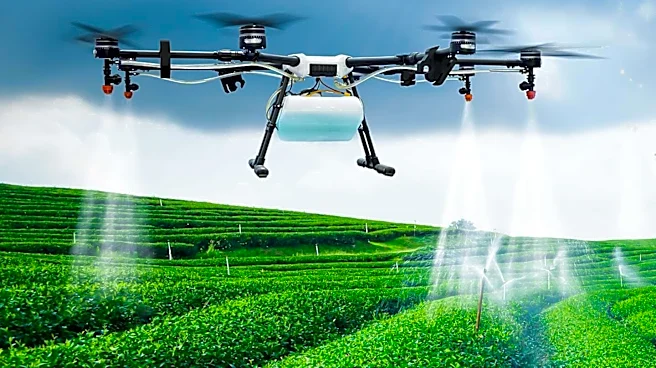
XAG has launched the RM80, an all-electric unmanned mowing robot, alongside a new generation of agricultural drones at an Agricultural Robot Conference in Guangzhou, China. The RM80 is designed for orchard management, land reclamation, and field stubble
removal. It operates on a dual-battery system, providing up to 40 minutes of operation per charge, and can handle slopes of up to 30 percent. The robot is equipped with four independent wheel motors and a lightweight aluminum frame, allowing it to navigate rough field conditions. Additionally, XAG unveiled its X Series agricultural robot system, which includes the X Series drone, XA1 docking station, and LM1 chemical mixing unit. This system aims to create a fully autonomous farming workflow by integrating tasks such as charging, chemical mixing, refilling, and cleaning.
Why It's Important?
The introduction of the RM80 and the X Series drone system represents a significant advancement in agricultural automation. By integrating multiple robotic systems, XAG is moving towards a comprehensive smart farming solution that can enhance efficiency and productivity in agriculture. The RM80's ability to manage stubble and weeds can improve crop health and reduce the need for chemical herbicides, benefiting both the environment and farmers' bottom lines. The X Series' autonomous capabilities, including high-precision positioning and efficient mapping, can streamline farming operations, reduce labor costs, and increase yield potential. This development is crucial as the agricultural industry seeks sustainable and efficient solutions to meet growing food demands.
What's Next?
XAG has not yet disclosed retail pricing for the RM80 or the X Series drone system, indicating that region-specific pricing and market packages will be announced as local dealers begin taking orders. The modular nature of these systems suggests that costs will vary based on the specific needs of each buyer's fleet setup. As these technologies are adopted, it is likely that other agricultural technology companies will follow suit, potentially leading to increased competition and innovation in the sector. Stakeholders, including farmers and agricultural businesses, will be closely monitoring the performance and cost-effectiveness of these new systems.