




What's Happening?
The U.S. glamping market, valued at $746.75 million in 2025, is projected to grow to $1.43 billion by 2031, according to Arizton. This significant growth reflects a broader transformation in the hospitality sector, where travelers are increasingly seeking
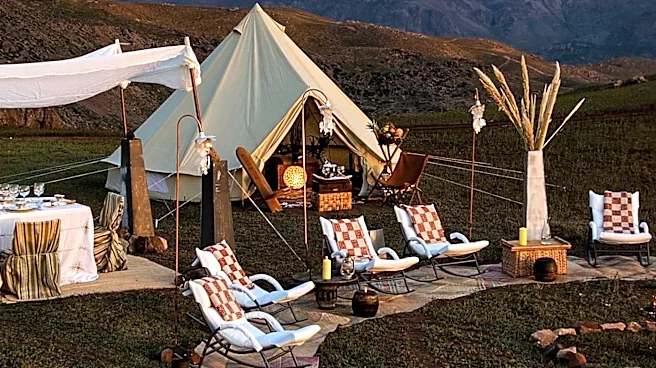
unique, experience-driven stays rather than traditional accommodations. Glamping, which combines premium lodging with immersive nature-based experiences, is evolving beyond its origins as 'luxury camping.' Popular glamping options include luxury cabins, geodesic domes, treehouses, yurts, and safari tents, all designed to offer modern comforts within natural settings. Operators are differentiating their properties through curated experiences such as wellness retreats, guided adventures, and stargazing. Digital visibility and strong online storytelling are crucial for attracting customers, with 83% of travelers using social media to plan trips. The industry is also moving towards year-round operations, with investments in insulated pods and climate-ready accommodations, and sustainability is becoming a core value proposition, with 89% of travelers considering it when booking.
Why It's Important?
This growth in the U.S. glamping market signifies a major shift in consumer preferences within the travel and hospitality industry. The demand for authentic, shareable experiences that blend comfort with nature is driving innovation and investment in outdoor hospitality. This trend creates substantial opportunities for developers, property owners, and hospitality brands to cater to a demographic, particularly Millennials and Gen Z, who prioritize unique and memorable stays. The emphasis on year-round operations and sustainable practices also indicates a maturing market that is becoming more resilient and environmentally conscious. For the U.S. economy, this expansion can lead to job creation in construction, hospitality, and related service sectors, especially in regions with natural attractions. The increased focus on digital marketing and online booking platforms also highlights the evolving landscape of customer acquisition and engagement in the travel industry.
What's Next?
The U.S. glamping market is expected to continue its rapid expansion, with ongoing innovation in accommodation formats and increased adoption of sustainable development practices. Operators will likely further integrate technology into the guest experience, from seamless digital booking to in-tent smart amenities. The market, currently fragmented, may see consolidation as established hospitality companies enter the segment through partnerships and specialized concepts. Investment in glamping properties is anticipated to rise, particularly in regions like the South, which offers lower land costs and expanding tourism infrastructure. The focus on year-round operations will lead to more robust business models, extending revenue streams beyond traditional peak seasons. Consumer demand for unique, nature-based stays without compromising comfort will continue to drive the market's long-term growth and resilience.
Beyond the Headlines
The rise of glamping reflects a deeper cultural shift towards valuing experiences over material possessions and a growing desire for reconnection with nature, even among those accustomed to modern conveniences. This trend also underscores the power of social media in shaping travel decisions, as visually appealing and 'Instagrammable' accommodations gain significant traction. The emphasis on sustainability within the glamping sector could influence broader environmental practices in the tourism industry, pushing for more resource-efficient construction and regenerative tourism models. Furthermore, the blend of luxury and nature in glamping challenges traditional notions of camping, making outdoor experiences accessible and appealing to a wider demographic. This evolution could lead to new forms of eco-tourism and outdoor recreation that prioritize both comfort and environmental stewardship, potentially impacting land use and conservation efforts in popular natural destinations.