






What's Happening?
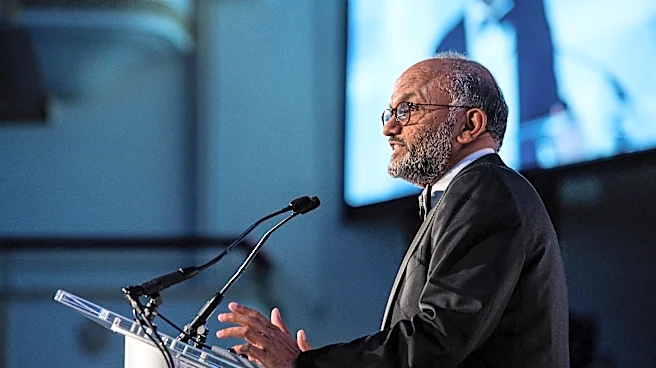
Shantanu Narayen, who has served as CEO of Adobe for 18 years, will transition to the role of executive chair on December 1, 2026. Concurrently, Anil Chakravarthy will assume the positions of president and CEO of Adobe. This leadership change marks a significant
shift in the company's executive structure. Adobe, founded in 1982 by John Warnock and Charles Geschke, is renowned for its creative software like Photoshop, Illustrator, Premiere Pro, and Acrobat, as well as its Firefly AI models and marketing software through Adobe Experience Cloud. The company's headquarters are in San Jose, California, with major U.S. offices in San Francisco, Seattle, Lehi (Utah), and New York, alongside international sites. This transition follows a period where Adobe has expanded its offerings to include AI technologies and continues to be a dominant force in creative and marketing software.
Why It's Important?
This leadership transition at Adobe is significant for the technology and creative industries. Shantanu Narayen's long tenure as CEO has overseen substantial growth and innovation, including the company's pivot to a subscription-based model and expansion into cloud services and AI. His move to executive chair suggests a continued strategic influence while allowing new leadership to steer day-to-day operations. Anil Chakravarthy's appointment as president and CEO indicates a new era for Adobe, potentially bringing fresh perspectives and strategies to address evolving market demands and competitive pressures from companies like Canva, Figma, Microsoft, Google, Salesforce, and Oracle. The change could impact Adobe's product development, market positioning, and overall corporate strategy, especially as AI image and video tools emerge as new challengers in the creative software space. Stakeholders, including investors, employees, and customers, will be watching closely for any shifts in direction or emphasis under the new leadership.
What's Next?
Effective December 1, 2026, Anil Chakravarthy will officially take over as president and CEO, with Shantanu Narayen assuming the executive chair role. This transition will likely involve a period of strategic alignment and communication from the new leadership regarding Adobe's future vision and priorities. The company may outline new initiatives or reinforce existing strategies related to its core creative suite, AI development, and enterprise marketing solutions. Industry analysts and investors will be keen to hear Chakravarthy's initial outlook and any potential changes in Adobe's operational or growth strategies. Employees will also be observing how this leadership change impacts internal culture and organizational structure. Competitors will be monitoring Adobe's moves to anticipate any shifts in market dynamics, particularly in the rapidly evolving AI and cloud software sectors.
Beyond the Headlines
The transition of a long-serving CEO to an executive chair role, while appointing a new CEO, often signifies a carefully planned succession aimed at ensuring continuity while injecting new energy. This move allows Narayen to maintain a strategic oversight, leveraging his extensive experience and institutional knowledge, while Chakravarthy brings a fresh operational perspective. This dual leadership structure can be beneficial, providing stability during change and fostering innovation. It also highlights the increasing complexity of leading major tech companies, where strategic vision needs to be balanced with agile execution. The shift could also signal Adobe's intensified focus on specific growth areas, such as further integrating AI across its product portfolio or expanding its market reach in competitive segments. The long-term implications could include a refreshed corporate identity and potentially more aggressive moves in emerging technology markets, shaping the future of creative and digital experiences.