


What's Happening?
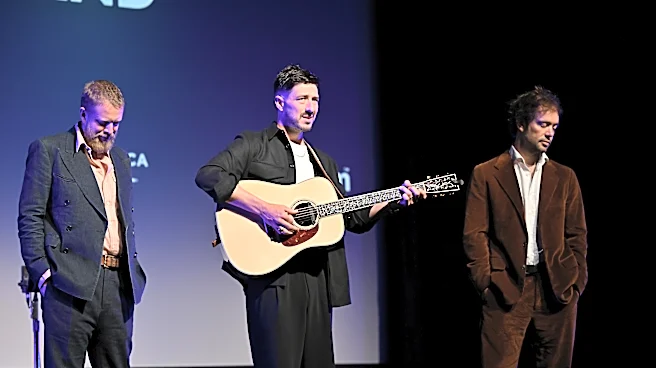
The upcoming New York City concert hall, Domino, founded by Ben Lovett of Mumford & Sons, initially launched its website with AI-generated graphics that contained errors. These errors included a ticket for a non-existent Strokes concert, blurry text,
typos, and an artificial texture, despite a prominent 'Human Made' postcard on the site. Business Insider flagged these issues to Domino, leading to a representative explaining that AI was used as an 'interim tool' due to time constraints for the venue announcement. The website has since been replaced with a 'completely human made' version. This incident highlights the ongoing debate among marketers regarding the appropriate use of AI, especially when it comes to representing human creativity and artistic endeavors. The venue itself is located in Williamsburg, a neighborhood experiencing a significant influx of AI startups, creating a blend of technology and its traditional artsy culture.
Why It's Important?
This incident underscores the challenges and potential pitfalls of relying on artificial intelligence for creative and public-facing content, particularly in industries that value authenticity and human artistry. For businesses, it serves as a cautionary tale about the importance of human oversight and quality control when integrating AI tools into their operations. The immediate replacement of the website by Domino demonstrates a recognition of the negative impact such errors can have on brand perception and credibility. Furthermore, the situation reflects a broader cultural shift in Williamsburg, where the traditional artistic community is now coexisting with a booming tech sector, particularly AI startups. This blending of cultures can lead to both innovation and friction, as seen in the initial misstep of the Domino website. The incident also highlights the ongoing debate about the role of AI in creative fields and the value placed on 'human-made' content.
What's Next?
Following the replacement of its AI-generated website, Domino will likely continue its preparations for its opening next year, focusing on establishing its brand as a venue that celebrates human creativity, as stated by its representative. The incident may prompt other businesses and marketers to re-evaluate their AI implementation strategies, emphasizing the need for careful integration and human review to avoid similar public relations issues. In Williamsburg, the ongoing dynamic between the burgeoning tech industry and the established arts scene will continue to evolve. The Domino venue, aiming to revive the neighborhood's artistic spirit, will be a key player in this cultural landscape, potentially influencing how technology and art intersect in the area. The debate surrounding AI's role in creative industries is expected to intensify, with more discussions on ethical considerations, authenticity, and the balance between efficiency and human touch.
Beyond the Headlines
The Domino website's AI flubs reveal a deeper tension between technological advancement and the preservation of human-centric values, especially in creative domains. The irony of an AI-generated site for a music venue, a space inherently tied to human expression and performance, underscores a fundamental question: can AI truly capture or represent the essence of human creativity? This incident touches upon ethical considerations regarding authenticity and the potential for AI to dilute the perceived value of 'human-made' art. Culturally, it reflects a broader societal grappling with the rapid integration of AI into everyday life and its impact on traditional industries and communities. The Williamsburg context further amplifies this, showcasing a neighborhood in transition, where the digital frontier is encroaching upon a historically artistic landscape. This development could trigger long-term shifts in how cultural institutions approach technology, potentially leading to more explicit declarations of 'human-made' content as a mark of quality and authenticity in an increasingly AI-driven world.