





What's Happening?
Vast, a space company, is developing its multi-module Haven Station with the goal of significantly reducing the cost and time associated with building commercial space stations. CEO Max Haot claims the company can construct a primary space station hull
for under $5 million and in approximately six months, a stark contrast to the traditional European vendors who charge around €55 million and take over four years. This cost-cutting is attributed to Vast's vertical integration strategy, where they manufacture most components in-house, including welding aluminum hulls, machining hatches, and building control moment gyros. The company plans to launch its uncrewed Haven-1 module in Q1 2027 on a Falcon 9 rocket, followed by a four-person Dragon crew for a two-week stay. Haven-1 is designed as a single-module station with 55 cubic meters of pressurized volume and will carry Starlink laser terminals for high-speed connectivity. Vast is competing in NASA's Commercial LEO Destinations program, aiming to secure contracts from NASA and other international partners.
Why It's Important?
Vast's approach could significantly disrupt the commercial space station market by making space access and research more affordable and accessible. By drastically reducing manufacturing costs and build times, Vast aims to open up the market to sovereign governments and other entities previously priced out. This could foster increased international collaboration in space, as nations like Saudi Arabia, the UAE, Poland, and Turkey have expressed interest. The success of Vast's model could also accelerate the development of in-space manufacturing and microgravity research, which Haot believes is currently throttled by the International Space Station's throughput and government queuing rules. A more cost-effective and readily available commercial space station could unlock new opportunities for scientific breakthroughs, particularly in areas like drug development, stem-cell organoids, and cancer treatments, by providing dedicated research platforms outside of government-controlled facilities.
What's Next?
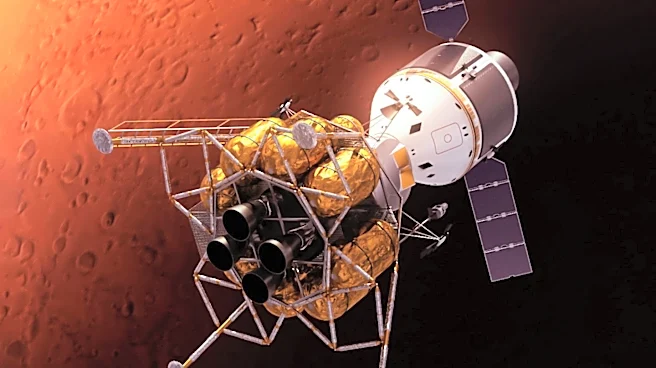
Vast's immediate next step is to successfully launch its uncrewed Haven-1 module in Q1 2027. This launch will be a critical test of their vertical integration strategy and cost-efficiency claims. Following the uncrewed mission, a crewed Dragon mission is planned, which will further validate the station's operational capabilities and safety. The company is actively competing in NASA's Commercial LEO Destinations program, and a win would secure significant government contracts and attract other international partners. Vast is also in negotiations to sell modules to foreign governments at what they describe as unprecedentedly low prices, which could expand their customer base beyond traditional spacefaring nations. Long-term, Vast envisions developing future habitats for Mars, dedicated modules for government partners, and a larger, spinning station called 'the Stick' to explore artificial gravity for long-duration space health.
Beyond the Headlines
The implications of Vast's strategy extend beyond mere cost reduction; it represents a fundamental shift in how space infrastructure could be developed and utilized. By emphasizing vertical integration and rapid iteration, Vast is applying a model seen in other successful tech industries to space, potentially democratizing access to low-Earth orbit. This could lead to a more competitive and innovative space economy, where the barriers to entry for developing and operating space stations are significantly lowered. Furthermore, Vast's focus on providing dedicated propulsion for deorbiting each module addresses growing concerns about space debris, offering a more responsible approach to end-of-life spacecraft management compared to the current plans for the ISS. The success of this model could also influence future government procurement strategies, pushing for more efficient and cost-effective solutions in space exploration and utilization.