






What's Happening?
Oil prices have experienced a significant drop, with Brent crude finishing down 38% in the fastest quarterly decline since 2020. This decrease is attributed to several factors, including the release of strategic reserves, the return of Iranian and Russian
oil to the market, and a reduction in consumption. China's strategic decision to draw down on its state oil reserves rather than purchasing new supplies has also contributed to the price drop. The current market conditions have led to a situation where refiners, rather than producers, are benefiting from the low crude prices due to high margins on refined products.
Why It's Important?
The drop in oil prices has broad implications for the global energy market and economic stability. While lower crude prices can reduce costs for consumers and industries, the tight supply of refined products like jet fuel and gasoline means that these benefits may not be fully realized. The situation highlights the complex dynamics of the oil market, where geopolitical events, strategic decisions by major players, and market conditions all interact to influence prices. For refiners, the current market presents an opportunity to capitalize on high margins, but for producers, it poses challenges in terms of revenue and market strategy.
What's Next?
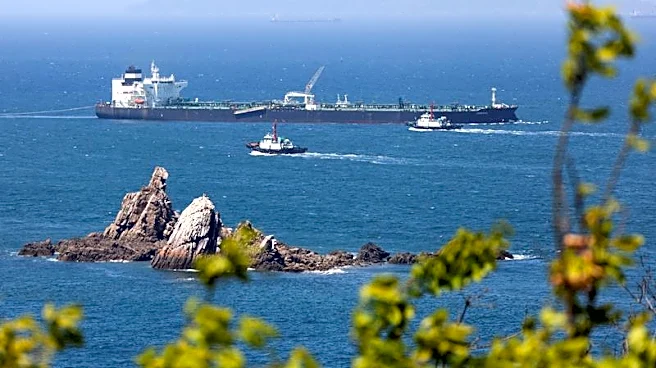
The future of oil prices will largely depend on geopolitical developments, particularly the resolution of the Iran-US conflict and the normalization of flows through the Strait of Hormuz. The presence of a large US naval force in the region suggests that geopolitical tensions remain high, and any changes in this dynamic could significantly impact oil supply and prices. Market analysts will be closely watching these developments, as well as the actions of major oil producers and consumers, to gauge the future direction of the oil market.