







What's Happening?
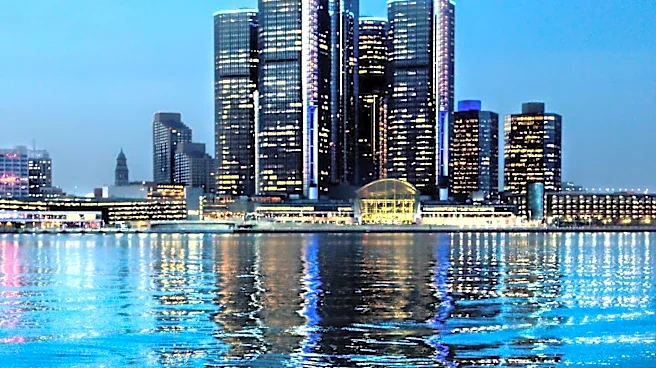
The $1.6 billion-plus redevelopment plan for Detroit's Renaissance Center, a joint effort by General Motors and Dan Gilbert's Bedrock, is making its official public debut this week. The project includes the demolition of two of the five original 1970s
Renaissance Center towers and the creation of a new, amenity-packed 30-acre riverfront park. To gather public input for the park's design, a public engagement hub has opened at 521 Atwater, operating Wednesdays through Fridays and Sundays for six months. An online survey is also available at Detroit-Riverfront.BedrockDetroit.com. The first Community Benefits meeting for the overall redevelopment was scheduled for August 18, where the developers will present their plans. GM relocated its global headquarters from the RenCen to Bedrock's new Hudson's Detroit development in January, leaving few occupants in the original towers.
Why It's Important?
This redevelopment project is a monumental undertaking for Detroit, aiming to transform an iconic but increasingly desolate landmark into a vibrant urban hub. The significant investment signals continued confidence in Detroit's revitalization and could serve as a catalyst for further economic development along the riverfront. The emphasis on public engagement for the riverfront park is crucial, as it seeks to ensure the new amenities truly serve the needs and desires of Detroit residents, fostering a sense of community ownership and pride. The project's scale, including the demolition of towers and the creation of extensive public spaces, has the potential to dramatically alter Detroit's skyline and urban fabric, attracting new businesses, residents, and tourists. It also highlights the ongoing trend of repurposing older urban structures to meet modern demands for mixed-use developments and green spaces.
What's Next?
The Community Benefits process, which includes a series of public meetings and hearings, will continue for several months, overseen by a nine-member Neighborhood Advisory Council. During this period, the developers will seek tax abatements and other incentives from the Detroit City Council, with a full list of requested incentives expected to emerge. The public engagement hub and online survey will continue to collect ideas for the riverfront park, which could include attractions like a ferris wheel, a marina, or a floating swimming pool. Demolition work on the two octagonal towers closest to the river and the concrete podium is aimed to start by summer 2027, with the entire development potentially taking five to ten years to complete. The project also calls for transforming the 72-floor center tower into a mix of hotel rooms and apartments, converting another tower into apartments, and renovating a third for office space, alongside building 350 new housing units within the riverfront park development.
Beyond the Headlines
The Renaissance Center redevelopment is more than just a construction project; it represents a symbolic shift in Detroit's urban narrative. Moving away from a fortress-like corporate complex, the plan aims to create a more open, accessible, and community-integrated riverfront. The public input process for the park reflects a growing demand for citizen participation in urban planning, ensuring that large-scale developments contribute meaningfully to the quality of life for local residents. The project's reliance on public financing and incentives, alongside private investment, underscores the complex interplay between government and private sectors in driving urban renewal. This transformation could redefine Detroit's image, moving it further from its industrial past towards a future as a dynamic, livable city with world-class public spaces. The long-term success will depend not only on the physical construction but also on the sustained engagement of the community and the ability to attract and retain diverse populations.