





What's Happening?
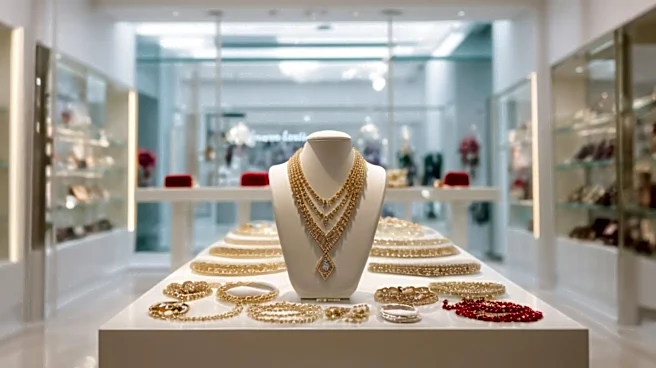
Pandora, the world's largest jewelry brand, headquartered in Copenhagen, Denmark, reported sales of DKK 31.7 billion (EUR 4.2 billion) in 2024. The company employs 37,000 people globally and specializes in designing, manufacturing, and marketing hand-finished
jewelry crafted exclusively from recycled silver and gold. Pandora's products are distributed in over 100 countries through more than 6,800 points of sale, including 2,700 concept stores. The brand has been recognized by the Financial Times as one of the best places to work in Europe and holds the top ranking among Danish companies. Pandora is also listed on the Nasdaq Copenhagen stock exchange, underscoring its significant presence in the global market.
Why It's Important?
Pandora's commitment to using only recycled silver and gold for its jewelry production highlights a growing trend in the retail sector towards sustainable practices. This approach not only addresses environmental concerns but also resonates with an increasing number of consumers who prioritize ethical sourcing and eco-friendly products. For the U.S. market, this could influence other jewelry retailers to adopt similar sustainable manufacturing processes, potentially shifting industry standards. The company's strong financial performance, with DKK 31.7 billion in sales, demonstrates that sustainability can be integrated with commercial success, offering a model for other businesses aiming to balance profitability with corporate social responsibility. Its global reach and recognition as a top employer also set a benchmark for workplace culture and employee engagement within the retail industry.
What's Next?
Pandora has set an ambitious goal to halve greenhouse gas emissions across its entire value chain by 2030. This commitment suggests a continued focus on environmental stewardship and could lead to further innovations in sustainable jewelry production and supply chain management. Other companies in the U.S. and globally may look to Pandora's strategies as they develop their own sustainability targets. The company's ongoing efforts to build an inclusive and diverse work environment, as well as its focus on employee well-being and development, indicate a potential for continued leadership in human resources practices. Future developments might include new partnerships with recycling initiatives or further investments in green technologies to meet its emission reduction targets.
Beyond the Headlines
Pandora's success in integrating sustainability into its core business model, particularly its exclusive use of recycled precious metals, challenges the traditional perceptions of the jewelry industry, which has often faced scrutiny over sourcing practices. This move could inspire a broader re-evaluation of material sourcing and production methods across various consumer goods sectors. The company's emphasis on giving people a 'voice for what they love' through its jewelry, coupled with its inclusive work environment, reflects a deeper cultural shift towards purpose-driven brands. This approach suggests that consumers are increasingly seeking products that align with their values, pushing companies to not only offer quality goods but also to demonstrate a positive societal and environmental impact. The long-term implications could include a more transparent and ethically conscious global supply chain for luxury goods.