






What's Happening?
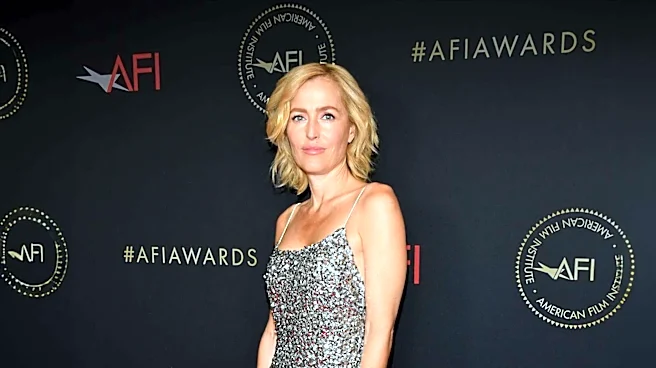
Gillian Anderson, who stars in the film adaptation of 'The Salt Path,' has addressed the controversy surrounding the memoir that inspired the movie. The book, written by Raynor Winn, details the journey of Winn and her husband Moth after losing their
home and Moth's health diagnosis. A report by The Observer in July 2025 challenged the authenticity of the memoir, suggesting that the couple's financial troubles were due to an unpaid loan rather than a bad business deal, and questioned the severity of Moth's health condition. Anderson expressed disappointment over the timing of the controversy, which coincided with the film's success in the UK and potential U.S. distribution. Despite the allegations, Anderson hopes audiences can appreciate the film independently of the controversy.
Why It's Important?
The controversy surrounding 'The Salt Path' highlights the impact of factual disputes on creative works and their commercial success. The film's potential distribution in the U.S. could be affected by the negative publicity, impacting its financial performance and the careers of those involved. Additionally, the situation underscores the challenges faced by memoirists in maintaining credibility, as discrepancies can lead to public skepticism and legal scrutiny. The case also raises questions about the responsibilities of publishers and filmmakers in verifying the authenticity of source material, which can have significant implications for the industry.
What's Next?
The future of 'The Salt Path' film's distribution, particularly in the U.S., remains uncertain as stakeholders assess the impact of the controversy. The film's producers and distributors may need to address the allegations publicly to mitigate potential damage. Meanwhile, Raynor Winn may continue to defend the memoir's authenticity, possibly through legal avenues or public statements. The controversy could also prompt discussions within the publishing and film industries about the vetting processes for adapting real-life stories, potentially leading to more stringent fact-checking protocols.