



What's Happening?
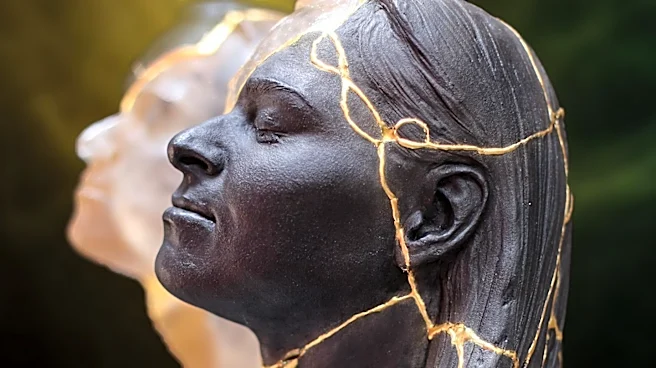
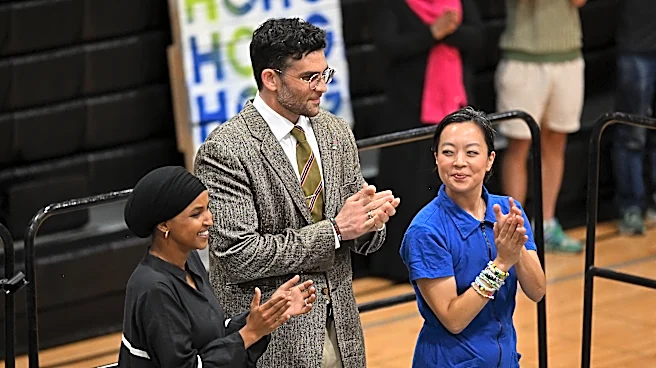
An upcoming exhibit in Downtown Honolulu, titled 'Marginalized: Portraits in Identity and Sign,' will showcase 14 busts representing diverse figures, including U.S. Senator Mazie Hirono, Minnesota Congresswoman Ilhan Omar, and LGBTQ+ activist Marsha P.
Johnson. Created by Hawaiʻi Island-based sculptor Amber Aguirre, the artworks aim to redefine heroism by celebrating individuals who have been marginalized due to disability, relationship, sexual orientation, or race. Aguirre, whose background includes being the daughter of a Holocaust survivor and undergoing a leg amputation, uses art as a tool for social and political commentary. The sculptures incorporate American Sign Language (ASL) as a statement, with figures like Omar signing 'Muslim' and a sculpture of Aguirre signing the letter 'D' for disabled. The exhibit will be on view at the Downtown Art Center from September 2 to 26.
Why It's Important?
This exhibit is important because it challenges conventional notions of heroism and representation in art by spotlighting individuals from marginalized communities. By featuring figures like Senator Hirono alongside other diverse personalities, the sculptor aims to highlight the strength and resilience of those who have had to overcome societal barriers. The inclusion of ASL in the artwork serves as a powerful statement, promoting awareness and understanding of different forms of communication and identity. This artistic approach encourages viewers to delve deeper into the biographies of these figures, fostering empathy and tolerance. In a broader societal context, such exhibits contribute to a more inclusive cultural narrative, recognizing the contributions and experiences of groups often overlooked in mainstream historical and artistic representations. It underscores the role of art in social commentary and its potential to inspire dialogue and change.
What's Next?
The 'Marginalized: Portraits in Identity and Sign' exhibit will be open to the public at the Downtown Art Center in Honolulu from September 2 to 26. Following its run, the artworks may potentially travel to other venues or be incorporated into permanent collections, further extending their reach and impact. The exhibit's themes of identity, resilience, and social commentary are likely to spark discussions within the art community and among the general public. Educational programs or workshops related to the exhibit's themes, including ASL and the experiences of marginalized communities, could also be developed. The sculptor, Amber Aguirre, may continue to create works that explore similar themes, building on the momentum generated by this exhibition and further contributing to the discourse on representation and social justice through art.
Beyond the Headlines
The exhibit's focus on 'reclaiming the historic, sculptural form of the bust' to honor marginalized individuals carries deeper implications for how history and achievement are commemorated. Traditionally, busts have been reserved for figures of power and privilege, often reflecting dominant societal norms. By choosing to depict individuals who have been excluded, Aguirre challenges this historical practice and broadens the definition of who is considered worthy of artistic commemoration. This act of artistic reappropriation can contribute to a more democratic and representative public memory. Furthermore, the integration of ASL into the sculptures not only raises awareness for the deaf community but also symbolizes the importance of diverse forms of communication and expression. It suggests that true understanding and empathy require engaging with different perspectives and experiences, moving beyond conventional narratives to embrace a richer, more complex tapestry of human identity.