


What's Happening?
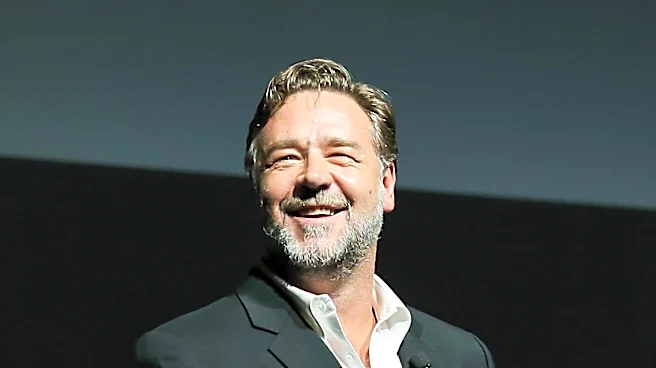
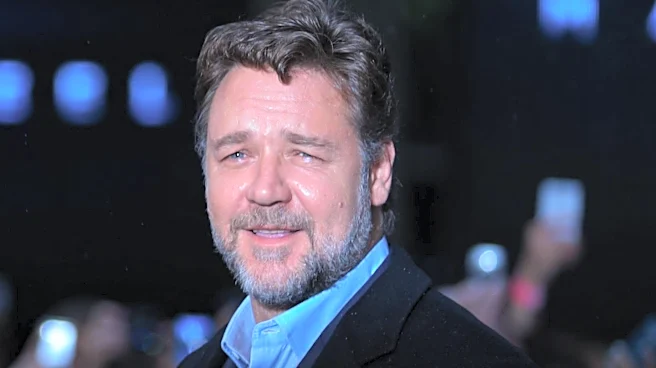
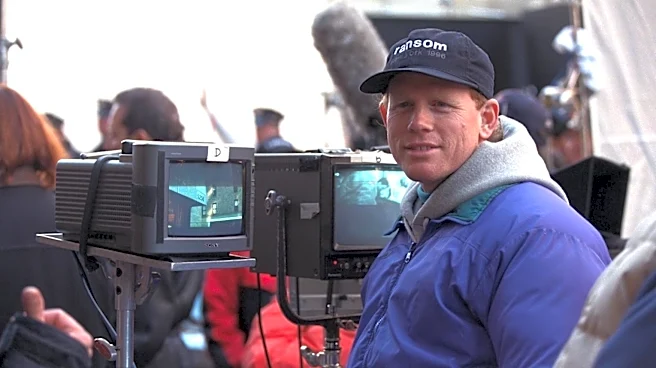
Director Ron Howard revealed that Russell Crowe's request to shoot the 2001 film 'A Beautiful Mind' in chronological order added approximately $1 million to the production budget. Crowe believed that filming sequentially would allow for a more accurate
and natural progression in portraying mathematician John Forbes Nash Jr.'s psychiatric journey and struggle with schizophrenia. Howard initially had to advocate for this approach with the studio due to the increased cost, which included two separate trips to Princeton, N.J. However, Howard ultimately agreed with Crowe, stating he was '100% right' and that it was 'the right kind of investment.' The film went on to win four Academy Awards, including Best Picture and Best Director for Howard, validating the decision to invest in the sequential filming method.
Why It's Important?
This insight into the production of 'A Beautiful Mind' highlights the critical role that actor input and directorial conviction can play in shaping a film's artistic integrity and ultimate success. Russell Crowe's insistence on a sequential shooting schedule, despite the significant financial implications, demonstrates a deep commitment to character development and authenticity. For the film industry, this story underscores that sometimes, creative decisions that incur additional costs can yield substantial artistic and critical rewards, ultimately proving to be a worthwhile investment. It also showcases the collaborative nature of filmmaking, where a director's willingness to trust an actor's instincts can lead to a more nuanced and impactful performance, which was crucial for a complex character like John Nash. The film's subsequent Oscar wins further validate the artistic merit of prioritizing performance integrity over strict budgetary constraints in certain circumstances.
Beyond the Headlines
The decision to shoot 'A Beautiful Mind' sequentially, despite the $1 million added cost, delves into the deeper philosophical aspects of filmmaking and performance. It speaks to the craft of acting, where an actor like Russell Crowe sought to embody a character's psychological evolution in a way that linear progression could best facilitate, rather than relying solely on discontinuous scene work. This approach can be seen as a commitment to method acting principles, allowing the actor to live through the character's experiences in a more natural timeline. Ethically, it raises questions about the balance between artistic integrity and financial pragmatism in Hollywood. While studios often prioritize cost-efficiency, this case demonstrates that investing in the creative process can lead to a more profound and critically acclaimed work, ultimately benefiting the studio's reputation and long-term profitability. It also serves as a testament to the value of a director-actor relationship built on trust and mutual respect for the artistic vision.