





What's Happening?
Mexico is actively promoting a 'dry canal' land corridor across the Isthmus of Tehuantepec as a viable alternative to increasingly disrupted global waterways like the Panama Canal, the Strait of Hormuz, and the Red Sea. Since 2019, Mexico has invested
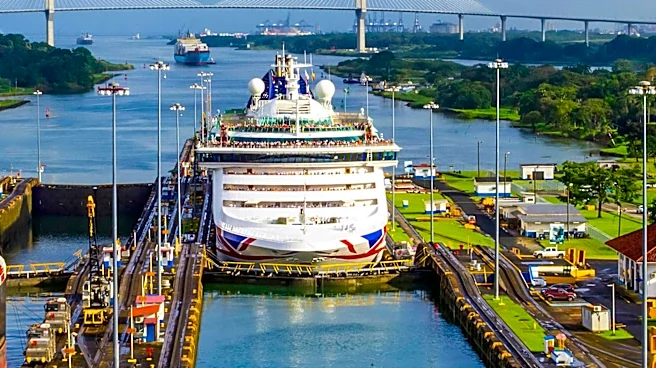
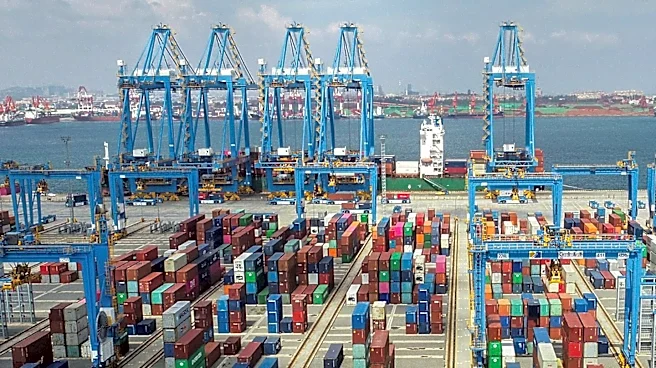
at least $4 billion into this project, known as the Interoceanic Corridor of the Isthmus of Tehuantepec (CIIT). This investment has facilitated the rehabilitation of over 500 miles of railway, upgrades to infrastructure, modernization of ports, and land acquisition for industrial development. The 190-mile rail link aims to connect a port on the Gulf of Mexico with another on the Pacific coast, offering a new route for freight containers. This initiative comes as the Panama Canal faces significant delays due to droughts, extending wait times from days to weeks, and other critical maritime chokepoints experience disruptions from geopolitical tensions.
Why It's Important?
The development of Mexico's 'dry canal' holds significant importance for global trade and U.S. economic interests. With major shipping routes experiencing increased volatility and delays, an alternative land-based corridor could enhance supply chain resilience and reduce transit times and costs for goods moving between the Atlantic and Pacific. For the U.S., this could mean more reliable and potentially faster access to goods from Asia and other regions, mitigating the impact of disruptions in traditional maritime routes. The project also aims to boost economic activity in southern Mexico, a region with high poverty rates, by attracting manufacturing plants and creating industrial hubs. This nearshoring trend, where companies relocate production closer to the U.S. market, could further integrate Mexico into the North American supply chain, potentially benefiting U.S. businesses seeking to diversify their manufacturing and logistics operations away from more distant or unstable regions. The corridor's strategic location, offering shorter transit times to U.S. ports compared to the Panama Canal, could make it an attractive option for various industries.
What's Next?
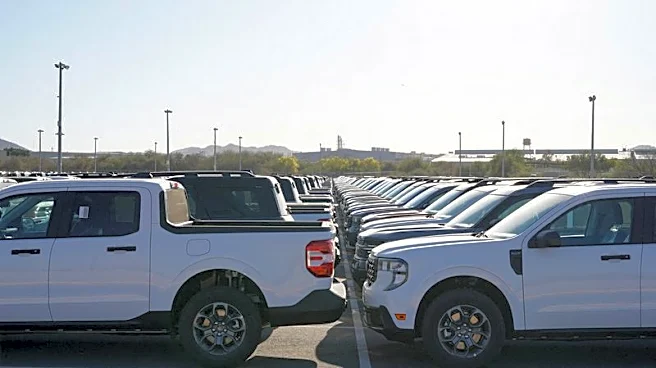
The immediate focus for Mexico is to attract cargo and manufacturing investment to the CIIT. While the government has made substantial infrastructure investments, the challenge lies in convincing businesses to utilize this new route and establish operations in the region. The administration is offering incentives, including more flexible concession terms for industrial hubs, to draw investors. The success of the corridor will depend on its ability to demonstrate efficiency, reliability, and cost-effectiveness compared to established routes. Initial commercial cargo movements, such as Hyundai transporting vehicles from Salina Cruz to Coatzacoalcos for shipment to the U.S., indicate a nascent interest. However, experts note that permanently altering global shipping routes will take years and require sustained effort to overcome challenges like limited infrastructure, high humidity, and the remote location of the corridor relative to Mexico's main manufacturing centers. The long-term vision includes developing specialized terminals and a faster railway, but the project's full impact on global trade and regional development remains to be seen.
Beyond the Headlines
Beyond its immediate economic and logistical implications, Mexico's 'dry canal' project reflects a broader geopolitical and environmental response to global challenges. The increasing frequency of disruptions in traditional waterways, whether due to climate change-induced droughts or geopolitical conflicts, underscores the vulnerability of global supply chains. This initiative represents an attempt to build redundancy and resilience into the international trade network. The project also highlights Mexico's strategic position as a key player in North American trade, particularly in the context of nearshoring and the USMCA trade agreement. However, the success of such large-scale infrastructure projects in developing regions often faces challenges related to environmental impact, social equity, and governance. The long-term sustainability of the CIIT will depend not only on its commercial viability but also on its ability to address these complex issues, ensuring that economic development benefits local communities and is environmentally responsible. The project could also influence future infrastructure development strategies in other regions facing similar trade chokepoint vulnerabilities.