







What's Happening?
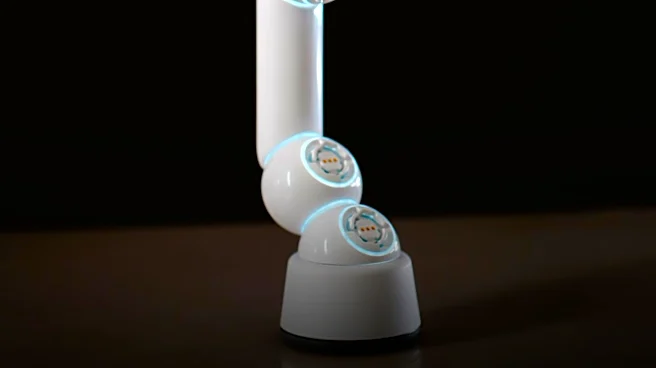
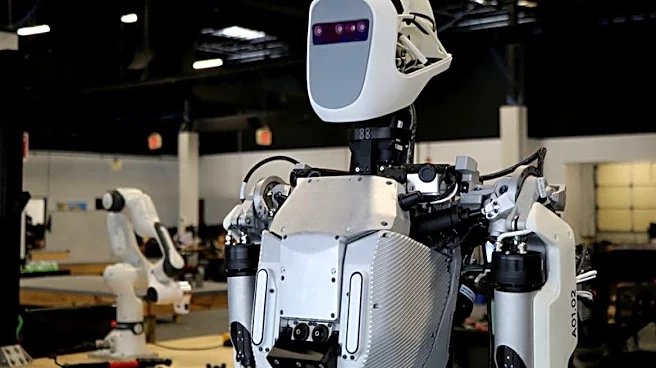
Genesis AI has introduced Eno, its first general-purpose robot, designed for industrial and laboratory applications. The robot, unveiled on June 16, 2026, features a wheeled base and a tower of articulated panels that can adjust in height and fold for compact
storage. At the core of Eno are dexterous hands with approximately 20 degrees of freedom, capable of performing tasks such as wire bundling and lab automation. The robot is powered by GENE, an integrated foundation model that serves as its 'robotics-native AI brain,' enabling perception, memory, planning, and long-term task execution. Genesis AI, which emerged from stealth in 2025 with a $105 million seed round, aims to deploy Eno in production settings by the end of 2026.
Why It's Important?
The introduction of Eno by Genesis AI marks a significant advancement in the field of robotics, particularly for industrial and laboratory environments. By focusing on functionality over humanoid mimicry, Genesis AI is positioning itself in a competitive market that includes warehouses, labs, and hospitality settings. The robot's design emphasizes practical industrial applications, potentially increasing efficiency and reducing labor costs in these sectors. The deployment of such robots could lead to significant changes in how industries operate, potentially displacing some human labor while creating new opportunities in robot maintenance and programming.
What's Next?
Genesis AI plans to target industrial customers initially, with production deployments expected by the end of 2026. As the company moves forward, it will likely focus on refining Eno's capabilities and expanding its market reach. The success of Eno could prompt other companies to accelerate their own robotics development, leading to increased competition and innovation in the sector. Stakeholders, including investors and industry leaders, will be closely monitoring the robot's performance and market reception.