







What's Happening?
Former Federal Reserve Chair Jerome Powell and his wife have sold their waterfront mansion on Gibson Island for $7.2 million, as reported by the Baltimore Business Journal. The couple originally purchased the six-bedroom, eight-bathroom property in 2006
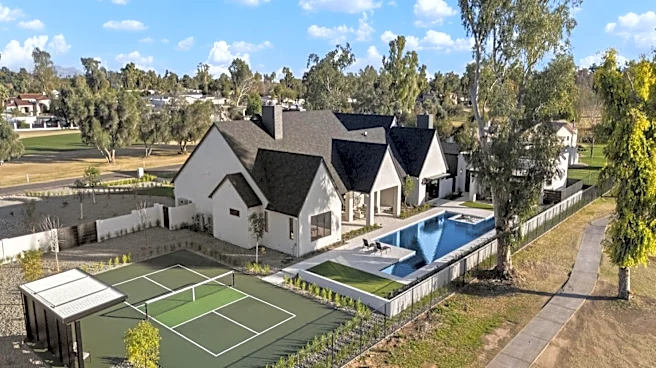
for $3.9 million. The two-acre estate boasts 200 feet of waterfront along the Magothy River, a private dock, and a swimming pool. Despite the sale of this significant property, the Powells are not leaving Gibson Island entirely; they acquired another property on the island last year for $3 million. Jerome Powell concluded his eight-year tenure as the nation's central bank chairman in May.
Why It's Important?
This transaction highlights the significant financial gains possible in high-end real estate markets, particularly for individuals with substantial assets. The sale price of $7.2 million, nearly double the original purchase price from 2006, underscores the appreciation of luxury properties in desirable locations like Gibson Island. For the broader economy, such high-value real estate transactions can reflect confidence in the housing market, especially in affluent areas. The ability of a former high-ranking official like Powell to engage in such a substantial real estate deal also subtly reinforces perceptions of financial stability among former government leaders, potentially influencing public trust in economic institutions. The continued investment in another Gibson Island property suggests a sustained preference for the area, which could impact local property values and development trends.
What's Next?
While the immediate financial implications for Jerome Powell are personal, the sale and subsequent purchase of another property on Gibson Island could contribute to ongoing real estate trends in the region. The high-profile nature of the seller might draw additional attention to the Gibson Island market, potentially influencing demand and pricing for other luxury properties. Local real estate agents and developers may leverage this sale as a benchmark for future transactions. For the community, the change in ownership of such a prominent property could lead to new developments or changes in local engagement, depending on the new owners' plans. The continued presence of the Powells on Gibson Island, albeit in a different residence, suggests their ongoing connection to the area.
Beyond the Headlines
The sale of Jerome Powell's mansion transcends a simple real estate transaction, offering a glimpse into the financial realities and post-service lives of high-ranking public officials. It raises questions about the financial opportunities available to those who have held influential positions, and how these opportunities might shape public perception of wealth and public service. The significant profit from the sale could also spark discussions about wealth accumulation and the accessibility of luxury markets. Furthermore, the story subtly touches upon the broader narrative of economic mobility and the concentration of wealth in specific geographic areas, reflecting underlying societal and economic structures. The decision to remain on Gibson Island, despite selling a major asset, suggests a deep personal connection to the community, which can have cultural and social implications for the island's identity.