










What's Happening?
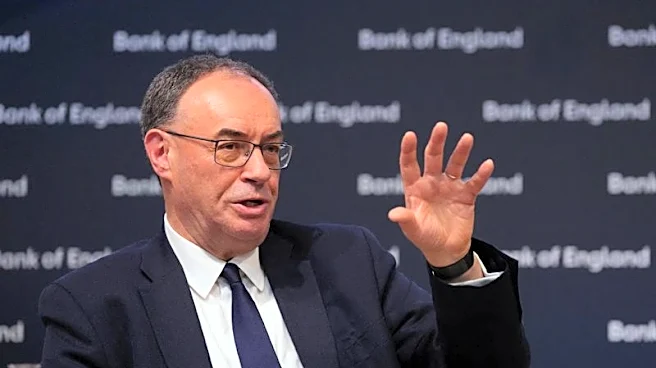
The Bank of England, led by Governor Andrew Bailey, has decided to maintain its current interest rates despite ongoing inflationary pressures. In a recent interview, Bailey explained that the decision was influenced by a softening UK economy and a labor
market that is not as robust as desired. The bank had previously considered rate cuts, but these were taken off the table due to market expectations and the need to address inflation, which remains above the target. The decision reflects a cautious approach to monetary policy, balancing the need to control inflation with the potential negative impacts on economic growth.
Why It's Important?
The Bank of England's decision to hold interest rates steady is significant for several reasons. It highlights the challenges central banks face in managing inflation without stifling economic growth. For the UK, maintaining rates could help stabilize the economy, which has been experiencing slower growth and a soft labor market. This decision also impacts global financial markets, as the UK's monetary policy can influence investor confidence and economic forecasts. Additionally, the decision underscores the complexities of navigating economic policy in a post-pandemic world, where traditional economic indicators may not fully capture the current economic landscape.
What's Next?
Looking ahead, the Bank of England will continue to monitor economic indicators closely. Future decisions on interest rates will likely depend on inflation trends, economic growth, and labor market conditions. The bank may also consider external factors such as geopolitical events and global economic shifts. Stakeholders, including businesses and consumers, will be watching for any signs of policy changes that could affect borrowing costs and economic stability. The bank's cautious approach suggests that any future rate adjustments will be carefully considered to balance inflation control with economic support.