
What's Happening?
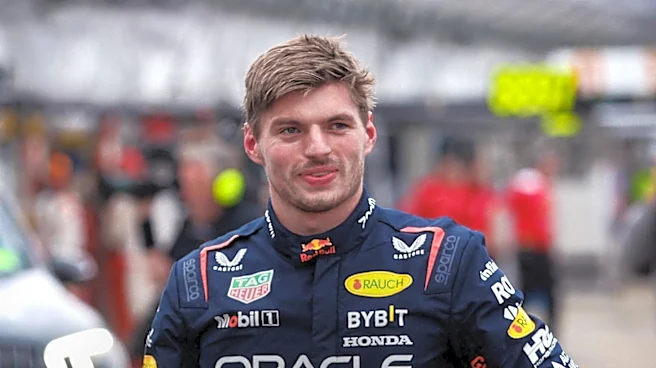
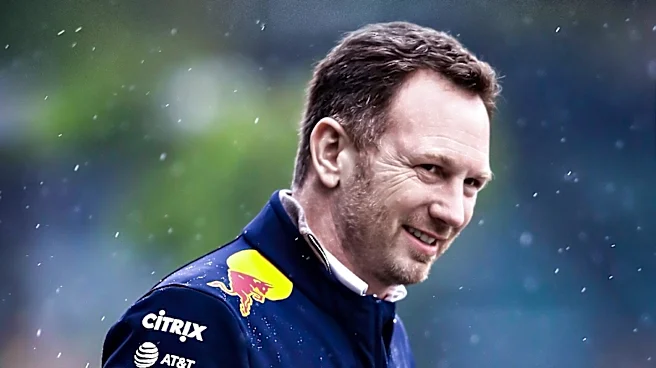
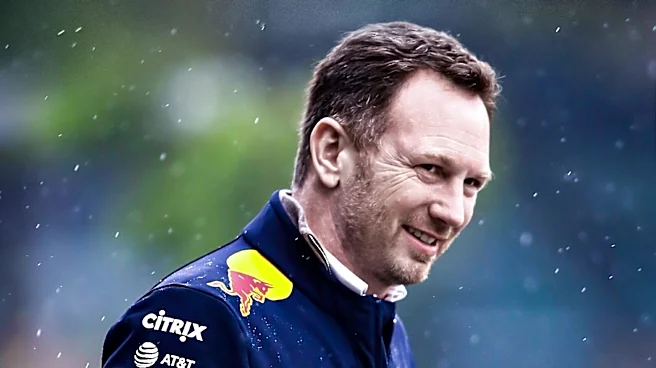
Christian Horner, former team principal of Red Bull Racing, has provided insight into Max Verstappen's exceptional performance and the team's car development philosophy. Speaking on the High Performance
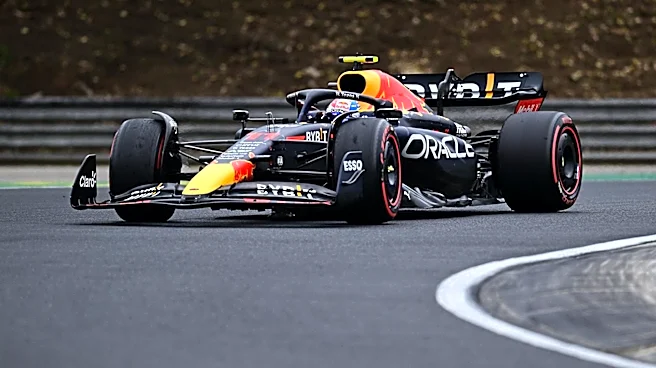
podcast, Horner explained that Verstappen possesses an "abnormal" skill that allows him to extract performance from a car setup that other drivers find challenging. This involves a preference for an aggressively balanced car with a very responsive front end and a loose rear. Horner revealed that in 2022, Red Bull shifted its development direction to better suit Verstappen's demands, particularly after discussions with his management around the Azerbaijan Grand Prix. This strategic decision meant the car's technical evolution increasingly catered to Verstappen's unique driving style, making it difficult for his teammates to adapt.
Why It's Important?
This revelation from Christian Horner is significant as it sheds light on the internal dynamics and engineering priorities within a top-tier Formula 1 team. By deliberately tailoring car development to a single driver, Red Bull maximized the potential of its "prime asset," Max Verstappen, leading to his dominant performance. However, this strategy also created a challenging environment for his teammates, who struggled to adapt to a car designed around Verstappen's specific preferences. This approach highlights a common dilemma in motorsport: whether to develop a car that is universally adaptable or one that maximizes the strengths of a star driver. The decision to prioritize Verstappen's needs underscores the high-stakes nature of Formula 1, where championship success often hinges on optimizing every possible advantage, even if it means creating a less forgiving car for other drivers. This strategy has clear implications for driver selection and team cohesion, as it can lead to a significant performance gap between teammates.
What's Next?
The insights provided by Horner suggest that Red Bull's development philosophy, centered around Max Verstappen's unique driving style, is likely to continue as long as he remains the team's leading driver. This means future teammates will face the ongoing challenge of adapting to a car that may not naturally suit their driving instincts. For Red Bull, the focus will remain on refining the car to further enhance Verstappen's performance, while simultaneously seeking drivers who can either adapt to this specific car characteristic or possess a similar driving style. Other teams might analyze Red Bull's approach to consider if a similar driver-centric development strategy could benefit their own top talents. The long-term implications could also influence how young drivers are scouted and trained, with an increased emphasis on identifying those who can handle aggressively balanced cars. This strategy will continue to shape the competitive landscape of Formula 1.
Beyond the Headlines
Horner's explanation delves into the deeper psychological and technical aspects of elite motorsport. The "abnormal" skill attributed to Verstappen suggests a rare cognitive and physical ability to control a car at its absolute limit, pushing engineering boundaries. This raises questions about the nature of talent in Formula 1—is it purely innate, or can it be cultivated through specific training and car development? Ethically, the decision to prioritize one driver's needs over others within a team can be seen as a pragmatic approach to winning, but it also highlights the intense pressure and competitive environment that can impact the careers of other talented drivers. Culturally, this narrative reinforces the idea of a "superstar" driver around whom a team's entire operation revolves, shaping public perception and fan engagement. The continuous pursuit of marginal gains through such specialized development strategies underscores the relentless innovation and adaptation required to succeed at the pinnacle of motorsport.