



What's Happening?
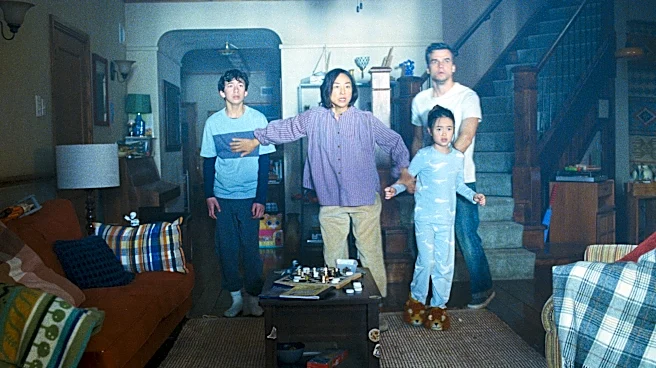
Wagner Moura, the star of Netflix's new film 'The Last House,' has drawn comparisons between the movie's themes and the isolation experienced during the COVID-19 pandemic. In the film, Moura plays Jason, who, along with his wife Ann, portrayed by Greta
Lee, and their two children, becomes trapped in their Seattle home due to a mysterious heavy rain. This phenomenon seals everyone in their homes, forcing the family to survive with limited resources. Moura expressed his hope that the characters in the film find positive changes after their ordeal, reflecting on his own expectations that the world would emerge from the pandemic with a new mindset. However, he noted that such a transformation did not occur as he had anticipated.
Why It's Important?
The film's narrative resonates with audiences who have experienced the global pandemic's impact, highlighting themes of isolation and survival. Moura's reflections on the lack of significant change post-pandemic underscore a broader societal sentiment of missed opportunities for transformation. This connection between the film and real-world events may enhance its relevance and emotional impact, potentially drawing viewers who relate to the characters' struggles. The film's release also contributes to ongoing discussions about how art reflects and influences societal perceptions of major events like the COVID-19 pandemic.
What's Next?
As 'The Last House' becomes available for streaming, it is likely to spark conversations about the parallels between its storyline and the pandemic experience. Viewers may engage in discussions about the film's themes and their own experiences during lockdowns. Additionally, the film's promotion, which includes a man living in a house atop a billboard, may attract further attention and curiosity, potentially boosting viewership. The film's reception could influence future projects that explore similar themes of isolation and societal change.