







What's Happening?
Panama has secured a $95 million investment loan from the Inter-American Development Bank (IDB) to expand sanitation services and improve environmental conditions across the Panama Metropolitan Area, Arraiján, and La Chorrera. This financing aims to provide
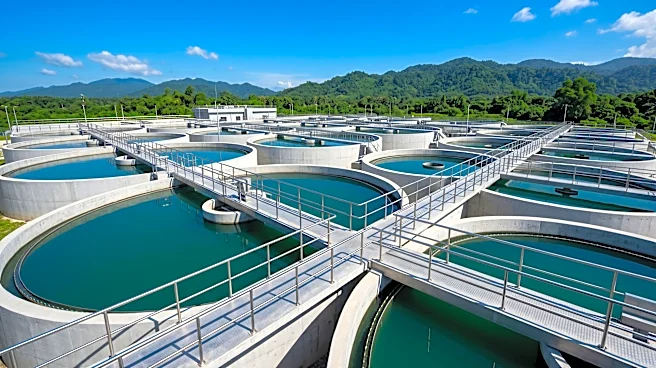
approximately 310,000 people with access to safer and more reliable wastewater infrastructure. Approved by the IDB's Board of Executive Directors, the loan supports Panama's Sustainable Financing Framework and addresses issues such as pollution, aging sewer networks, and increasing pressure on waterways in densely populated urban communities. Key infrastructure projects include the rehabilitation of the Amador sanitary sewerage system and the construction of sanitation facilities in neighborhoods around Condado del Rey. The program will also fund the design, construction, operation, and maintenance of the Caimito wastewater treatment plant and the initial phase of the Dos Líneas facilities, increasing treatment capacity. Additionally, the Juan Díaz wastewater treatment plant will receive complementary infrastructure for reusing treatment by-products, promoting sustainable resource management.
Why It's Important?
This IDB loan is critical for Panama's public health and environmental sustainability. By expanding and upgrading wastewater infrastructure, the project will significantly reduce untreated discharges into waterways, mitigating health risks and improving environmental quality for hundreds of thousands of residents. The focus on climate resilience in infrastructure design, particularly for handling intense rainfall and changing water flows, is vital for a region vulnerable to climate change impacts. For U.S. businesses, this investment creates opportunities in water treatment technologies, engineering, and construction services. A healthier and more environmentally stable Panama can also contribute to regional stability, which is beneficial for U.S. strategic interests and trade relations in Latin America. The project's emphasis on sustainable resource management and environmental education also aligns with broader international development goals, potentially fostering a more resilient and informed populace.
What's Next?
The project will proceed with the rehabilitation of existing sewerage systems and the construction of new sanitation facilities, including the Caimito wastewater treatment plant and the first phase of the Dos Líneas facilities. Construction planning for the Matansillo River main interceptor will continue, aiming to improve wastewater collection and transport. Communities in West Arraiján and La Chorrera will receive support for a connected system covering wastewater collection, conveyance, and treatment. A portion of the financing will also upgrade Panama's Interactive Environmental Education Center, enhancing public learning about sanitation and water protection. The Panama Sanitation Program Coordinating Unit (UCPSP) will receive training in contract administration and risk management, with a focus on designing climate-resilient sanitation infrastructure. This project is the first approved under a $210 million Conditional Credit Line for Investment Projects, indicating potential for further investments in sanitary and environmental conditions in Panama and West Panama provinces.
Beyond the Headlines
Beyond the immediate infrastructure improvements, this project carries significant long-term implications for public health, environmental justice, and urban planning. Cleaner waterways will not only reduce disease but also restore ecological balance, benefiting biodiversity and local ecosystems. The emphasis on environmental education can foster a culture of sustainability among citizens, leading to more responsible water usage and waste disposal habits. For communities living near polluted rivers and coastal areas, the project offers a pathway to improved quality of life and reduced health disparities. The integration of climate resilience into infrastructure design is a forward-thinking approach, acknowledging the increasing threats posed by climate change. This comprehensive strategy, combining physical infrastructure with education and capacity building, exemplifies a holistic approach to sustainable urban development that could serve as a model for other developing nations facing similar challenges.