





What's Happening?
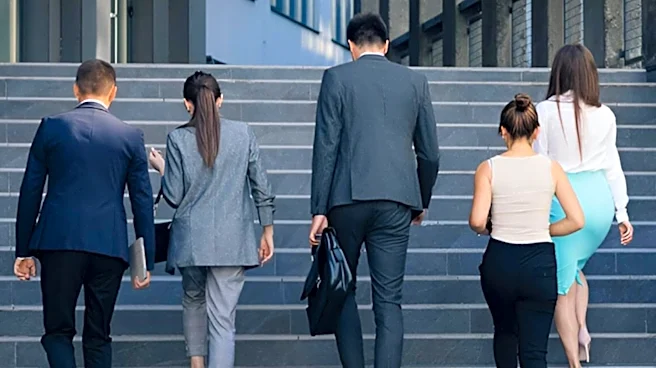
Gen Z in China is actively challenging traditional corporate norms by adopting unique strategies to combat 'office aging,' a phenomenon describing the physical and mental toll of the 9-to-5 workday. Young workers are implementing 'punk wellness' tactics,
such as herbal foot baths during work hours and consuming goji berry water, to maintain their vitality. This generation is also embracing 'gross office outfits,' deliberately choosing comfortable, unglamorous loungewear for work. This trend, widely shared on platforms like Xiaohongshu, signifies a micro-rebellion against intense labor market pressures, aiming to reclaim personal well-being and energy typically spent on professional presentation. The movement highlights a desire to redefine work-life boundaries and assert personal identity within demanding corporate environments.
Why It's Important?
This shift in Gen Z's approach to corporate culture has significant implications for U.S. businesses and human resources. As this generation increasingly enters the workforce, their emphasis on personal well-being, comfort, and authentic self-expression will likely influence workplace policies and expectations. Companies that fail to adapt to these evolving values may struggle with talent acquisition and retention. The 'punk wellness' and 'gross office outfit' trends, while originating in China, reflect a broader generational desire for work-life balance and a rejection of performative professionalism. U.S. employers might need to reconsider dress codes, wellness programs, and overall corporate environments to align with these emerging employee priorities, potentially leading to more flexible and employee-centric workplaces. This could also spur innovation in corporate wellness offerings and workplace design.
What's Next?
The trends observed among Gen Z in China could foreshadow similar shifts in U.S. corporate culture. Businesses may increasingly explore more flexible dress codes and enhanced wellness initiatives that cater to a younger workforce's holistic well-being. We might see a rise in demand for on-site wellness facilities, mental health support, and policies that genuinely promote work-life integration rather than just work-life balance. Furthermore, the emphasis on authenticity and comfort could lead to a broader re-evaluation of professional appearance standards across various industries. Companies that proactively engage with these generational preferences are likely to gain a competitive edge in attracting and retaining top talent, while those resistant to change may face challenges in maintaining employee satisfaction and productivity.
Beyond the Headlines
Beyond the immediate impact on corporate policies, these trends reflect a deeper cultural re-evaluation of the relationship between work and personal identity. Gen Z's actions suggest a rejection of the idea that one's professional life should entirely dictate personal well-being or self-expression. This could lead to a long-term shift in societal values, where personal health and authenticity are prioritized over traditional markers of corporate success. The 'micro-rebellions' against the 9-to-5 grind could foster a more human-centered approach to work, potentially influencing future labor laws, employee rights, and the overall structure of the modern workplace. It also highlights the increasing global interconnectedness of youth culture, where trends originating in one part of the world can quickly resonate and influence behaviors in others, including the U.S.