
What's Happening?
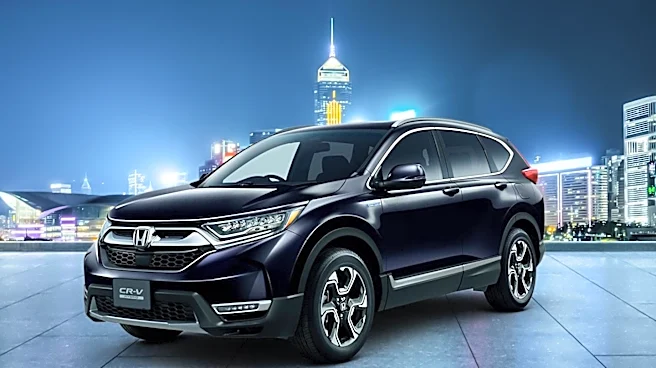
Honda North America is undergoing a strategic shift in its vehicle lineup, moving away from fully electric vehicles (EVs) to focus on hybrid models. This decision comes after the company announced the discontinuation
of its Prologue EV and the cancellation of its planned US-built 0 Series EVs. The change in strategy is partly due to the loss of federal EV incentives and slower-than-expected demand for electric vehicles. Honda's pivot includes a plan to introduce a new lineup of hybrid vehicles, with a global slate of 15 models by 2030. This move has disappointed some current Prologue owners who were expecting to continue with Honda's electric offerings.
Why It's Important?
The shift in Honda's strategy highlights the broader challenges facing the EV market in the U.S., including high development costs and the recent loss of federal tax credits for EVs. This change could impact Honda's market position and customer loyalty, as some consumers may seek alternative brands that continue to offer fully electric options. The decision also reflects a trend among automakers like Stellantis, Ford, and General Motors, who are reevaluating their EV strategies in response to market conditions. The focus on hybrids may help Honda maintain a competitive edge by appealing to consumers looking for more fuel-efficient options amid rising gas prices.
What's Next?
Honda's decision to focus on hybrids could lead to significant financial implications, including potential write-downs of up to $15.7 billion. The company will need to manage customer expectations and loyalty as it transitions its lineup. Additionally, the broader EV market may see stabilization as gas prices influence consumer preferences. Honda's competitors will likely monitor these developments closely, potentially adjusting their strategies in response to market shifts. The automotive industry will continue to navigate the balance between innovation and market demand as it adapts to changing consumer and regulatory landscapes.