







What's Happening?
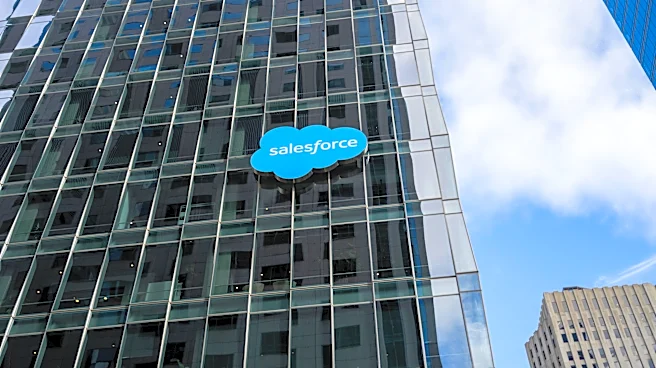
Salesforce has begun another round of layoffs, impacting employees across various teams, including a senior manager in IT compliance and content strategy. The exact number of affected individuals and specific departments have not been publicly disclosed
by the company. These job cuts follow previous workforce reductions earlier in the year, including 86 positions in California in August and fewer than 1,000 roles in early 2026. The layoffs coincide with a significant decline in Salesforce's stock performance, with shares falling 19.77% over the past month and 26.07% year-to-date. Investors are expressing concerns about the company's artificial intelligence (AI) strategy and its ability to translate AI investments into sustainable revenue. CEO Marc Benioff has publicly dismissed fears of a 'Saaspocalypse,' asserting that AI is enhancing Salesforce's platform rather than replacing it. Concurrently, Salesforce has implemented monthly spending limits for employees using AI tools after reports of some workers incurring thousands of dollars in AI token costs.
Why It's Important?
The ongoing layoffs at Salesforce, a major player in the enterprise software industry, signal broader challenges facing traditional software companies as AI reshapes the technology landscape. Investor skepticism regarding Salesforce's AI strategy and its financial implications is evident in the company's declining stock value. The move to control internal AI spending highlights the significant costs associated with AI adoption, even for tech giants. This situation could influence how other companies approach their AI investments and cost management, potentially leading to more cautious spending or similar workforce adjustments across the sector. The pressure on Salesforce to demonstrate tangible returns from its AI platform, Agentforce, reflects a critical juncture for the industry, where the promise of AI must be balanced with profitability and operational efficiency. The company's performance and strategic decisions will likely serve as a benchmark for how established tech firms navigate the AI transition.
What's Next?
Salesforce is scheduled to release its fiscal third-quarter 2027 earnings report on December 2. Investors will be closely watching this report for clearer indications of the company's AI business performance, revenue growth, and expense management strategies. Further details regarding the scope of the recent layoffs and any additional guidance on workforce adjustments or AI spending are also anticipated. The company's proposed $5.6 billion acquisition of Braze will likely remain a point of discussion, with investors seeking clarity on its financial commitments and potential impact on debt. The market's reaction to these updates will be crucial in determining Salesforce's short-term stock trajectory and investor confidence in its long-term AI vision. Continued scrutiny from analysts and stakeholders will pressure Salesforce to articulate a compelling and profitable path forward in the evolving AI-driven software market.
Beyond the Headlines
The situation at Salesforce underscores a fundamental shift in the technology industry, where the rapid advancement of generative AI is forcing companies to re-evaluate their business models, cost structures, and workforce needs. The tension between investing heavily in cutting-edge AI and maintaining profitability is a complex challenge. The internal imposition of AI spending limits for employees suggests a growing awareness of the 'hidden' costs of AI, beyond initial development and deployment. This could lead to a broader trend of companies implementing stricter controls on AI resource consumption. Furthermore, the layoffs, despite CEO Marc Benioff's optimistic outlook on AI, highlight the potential for AI-driven automation to impact employment in the tech sector, raising questions about future job roles and the skills required in an AI-centric economy. The ongoing narrative at Salesforce could influence public and corporate perceptions of AI's disruptive potential and its implications for the future of work.