



What's Happening?
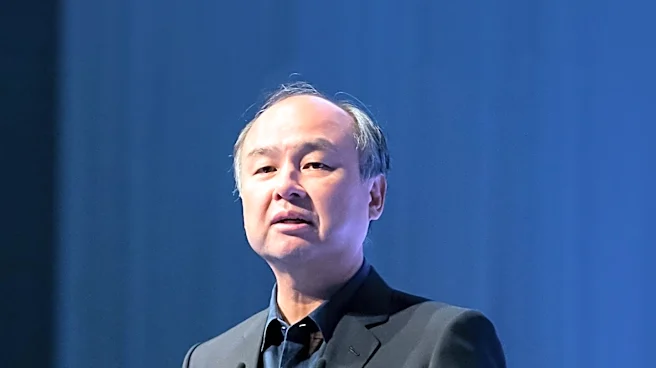
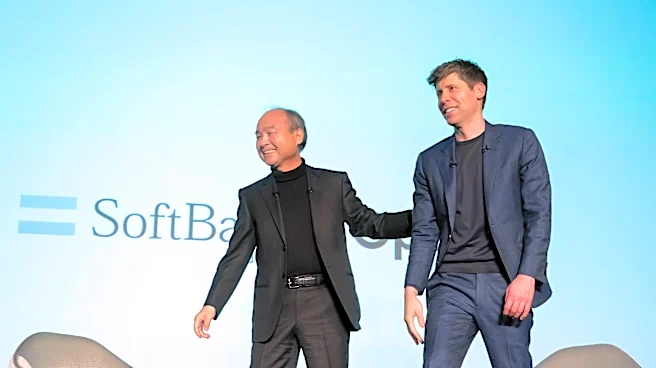
SoftBank Group founder Masayoshi Son reportedly explored a potential $1 trillion acquisition of South Korean memory chipmaker SK Hynix, which would have been the largest acquisition in history. According to The Information, Son approached Wall Street
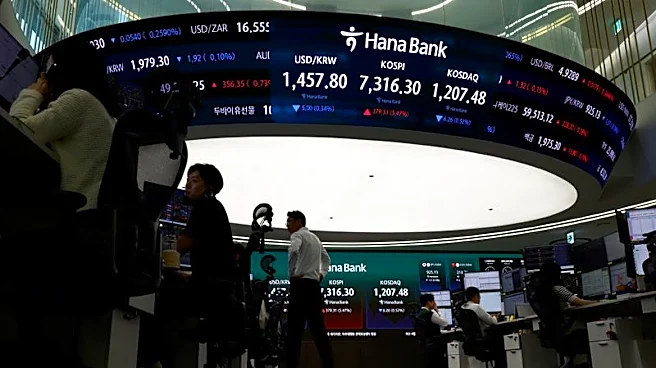
banks to discuss financing for this massive buyout. However, SoftBank has since stated that the idea is no longer under active consideration. SK Hynix, a critical supplier of high-bandwidth memory (HBM) chips essential for artificial intelligence (AI), was valued at approximately $577 billion at the time of the report. A $1 trillion deal would have implied a premium of about 73%. SoftBank's own market value is significantly smaller, at around $108.7 billion, making the proposed acquisition roughly 9.2 times its own market value. SK Hynix stated it had no knowledge of the matter and noted that any foreign acquisition would require prior government approval under Korean law.
Why It's Important?
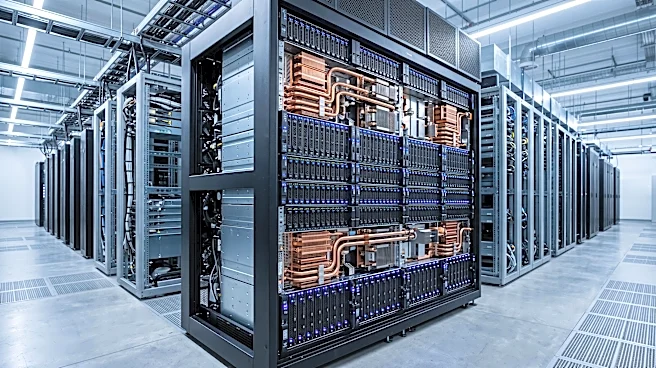
This abandoned acquisition attempt highlights the immense strategic importance of memory chips in the burgeoning AI industry. SK Hynix is a leading provider of HBM chips, crucial for processing the vast data volumes required by AI computing, and a key supplier to companies like Nvidia. For Masayoshi Son, acquiring SK Hynix would have significantly bolstered SoftBank's AI portfolio, which already includes chip design (Arm), computing infrastructure, and AI software, positioning SoftBank across nearly every layer of the hardware supporting AI. The sheer scale of the proposed $1 trillion deal underscores the aggressive pursuit of dominance in the AI sector and the willingness to make unprecedented financial bets. The financial strain on SoftBank, which reported a 768 billion yen ($6.5 billion) net loss for April–September, also indicates the high-stakes environment in which such large-scale ventures are considered.
What's Next?
While SoftBank has confirmed that the acquisition of SK Hynix is no longer under active consideration, the exploration of such a monumental deal signals Masayoshi Son's continued ambition in the AI sector. SoftBank is likely to continue seeking strategic investments and partnerships to strengthen its position in the AI ecosystem, particularly in areas related to chip technology and infrastructure. The company's financial performance and its loan-to-value ratio will remain key indicators of its capacity for future large-scale investments. Additionally, the South Korean government's stance on foreign ownership of strategic assets like SK Hynix will continue to be a significant factor in any potential future acquisition attempts by foreign entities in the country's critical technology sectors.
Beyond the Headlines
The reported $1 trillion acquisition attempt, even if abandoned, reveals the intense competition and valuation pressures within the global technology landscape, particularly in the AI domain. It underscores how critical components like memory chips have become central to national economic and technological strategies. The complexity of financing such a deal, involving potential borrowing on an unprecedented scale and navigating regulatory hurdles, highlights the challenges of mega-mergers in an era of increasing geopolitical scrutiny. This event also reflects Masayoshi Son's reputation for making audacious, high-risk, high-reward investments, which have historically yielded both significant successes and substantial losses. The focus on AI infrastructure and the underlying hardware components suggests a long-term shift in investment priorities towards foundational technologies that power the AI revolution.