



What's Happening?
Honda is significantly re-evaluating its electric vehicle (EV) strategy in North America, shifting its focus from battery-electric vehicles (BEVs) to hybrids. The company has confirmed the discontinuation of its only BEV model in the U.S., the Prologue,
after the 2026 model year. This decision follows the earlier cancellation of three other electric vehicles—the Honda 0 SUV, Honda 0 Saloon, and Acura RSX—that were slated for U.S. production. Honda attributes this strategic pivot to slower-than-anticipated growth in the American EV market, influenced by changes in incentives and environmental regulations. The automaker believes that launching more BEV models under current conditions could lead to further financial losses. Consequently, Honda plans to introduce next-generation hybrids starting in 2027, with 15 models globally by March 2030, giving particular attention to the North American market. Manufacturing operations are also being adjusted, with excess capacity at Ohio car plants being reallocated to gas and hybrid vehicle production, and all North American automobile plants being made capable of building hybrids.
Why It's Important?
This strategic shift by Honda carries significant implications for the U.S. automotive market, consumer choices, and the broader transition to electric vehicles. For consumers, it means a continued emphasis on hybrid options from a major manufacturer, potentially slowing the pace of BEV adoption in the short to medium term. For the automotive industry, Honda's move highlights the challenges and uncertainties surrounding the EV market, particularly regarding consumer demand, infrastructure, and regulatory landscapes. Other automakers may observe Honda's strategy closely, potentially influencing their own investment decisions in BEVs versus hybrids. This could also impact the supply chain for EV components, as Honda and LG Energy Solution are reportedly converting parts of their joint venture's EV battery production lines to support hybrid vehicles. The decision also reflects a pragmatic response to market realities, prioritizing profitability and consumer preferences in the current environment over an aggressive, potentially loss-making, BEV-only push.
What's Next?
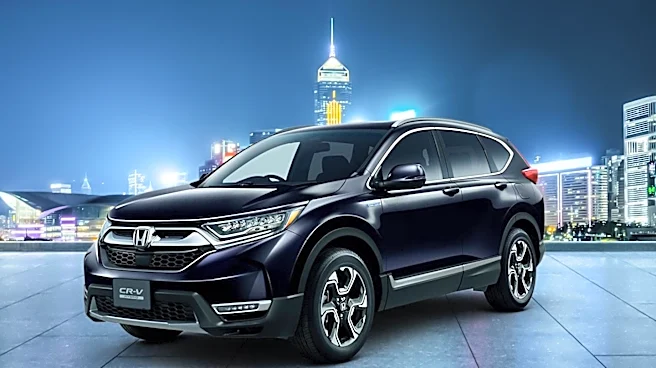
In the immediate future, Honda will concentrate on rolling out next-generation hybrid versions of its popular models, including the CR-V Hybrid, Civic Hybrid, and Accord Hybrid, with plans to electrify larger models like the Pilot, Passport, and Ridgeline with new V6 hybrids starting in 2029. The company's manufacturing facilities in Ohio will be reconfigured to support this hybrid-focused production. Honda's future investment decisions regarding BEVs beyond March 2029 will be heavily influenced by evolving market demand trends. While the company is still developing a future electric platform and solid-state batteries, the introduction of a battery-electric CR-V, for instance, is now projected to extend into the 2030s. This indicates a cautious, demand-driven approach to future BEV launches, suggesting that Honda will wait for a stronger business case before committing significant resources to new all-electric models in the U.S.
Beyond the Headlines
Honda's recalibration of its EV strategy underscores a broader industry debate about the optimal pace and pathway for automotive electrification. While many governments and environmental advocates push for rapid BEV adoption, manufacturers like Honda are grappling with the economic realities of consumer demand, charging infrastructure limitations, and the cost of battery technology. This move could signal a more prolonged transition period where hybrids play a crucial bridging role, offering improved fuel efficiency and lower emissions compared to traditional gasoline vehicles, without the range anxiety or charging complexities associated with BEVs. It also raises questions about the effectiveness of current EV incentives and regulations in stimulating widespread consumer adoption. The long-term implications could include a more diversified powertrain market in the U.S., where hybrids maintain a significant share alongside BEVs, rather than a swift, wholesale shift to all-electric vehicles.