









What's Happening?
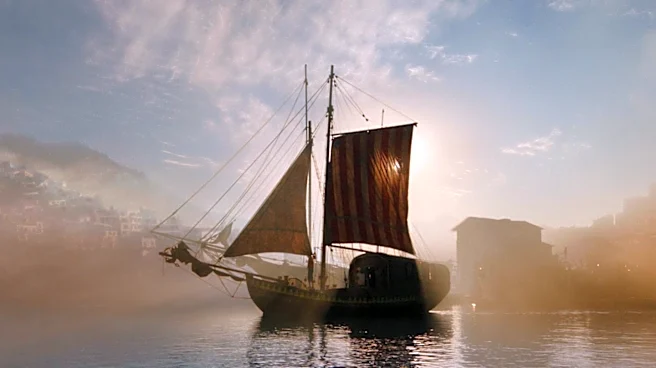
Christopher Nolan's latest film, 'The Odyssey,' has been released to critical acclaim, showcasing the director's ability to bring a classic epic poem to life on the big screen. The film, starring Matt Damon as Odysseus, adapts Homer's ancient tale of
the hero's journey home after the Trojan War. Critics have praised the film for its immersive world-building and epic scope, with Nolan's naturalistic visual style and use of real locations enhancing the believability of the story's fantasy elements. The film's success highlights Nolan's commitment to creating a cinematic experience that balances artistic vision with blockbuster appeal.
Why It's Important?
'The Odyssey' represents a significant moment in contemporary filmmaking, demonstrating that big-budget films can still prioritize artistic integrity and storytelling depth. In an era where many studio blockbusters rely on formulaic approaches and heavy CGI, Nolan's film stands out for its dedication to creating a fully realized world that respects the source material. This approach not only appeals to audiences seeking quality cinema but also sets a precedent for future filmmakers to pursue ambitious projects that challenge conventional studio practices. The film's success could encourage studios to invest in more director-driven projects.
Beyond the Headlines
Nolan's 'The Odyssey' also raises questions about the role of historical accuracy and cultural representation in filmmaking. While the film has been praised for its visual style, some critics have noted the lack of Mediterranean ancestry in the cast and anachronistic costume designs. These choices reflect broader industry trends where artistic vision sometimes takes precedence over historical fidelity. The film's reception may spark discussions about the balance between creative freedom and cultural authenticity in storytelling, influencing how future adaptations of historical and mythological works are approached.