




What's Happening?
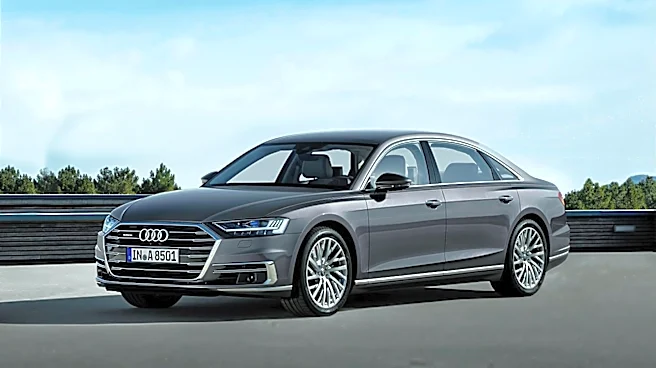
The Volkswagen Group has announced a significant restructuring of its luxury sedan portfolio, with the next-generation Audi A8 and Porsche Panamera set to share a common platform and manufacturing facility at Porsche’s Leipzig plant. This strategic consolidation,
reported by Automotive News and German newspaper Heilbronner Stimme, aims to streamline production and free up capital for investments in electrification and software development. Production for these shared models is slated to begin no earlier than 2030. This move mirrors the existing partnership between the Porsche Taycan and Audi E-Tron GT. The current Audi A8 is scheduled to end production in 2025, creating a five-year gap before its successor arrives. During this interim period, Audi plans to direct customers towards its new Q9 flagship SUV. Despite sharing underpinnings, both brands are expected to maintain distinct identities, with Porsche focusing on performance and Audi on luxury and comfort, through independent calibration of powertrains, transmissions, and suspension geometries.
Why It's Important?
This strategic shift by the Volkswagen Group is crucial for its competitiveness in the evolving automotive landscape, particularly against Tesla, Chinese EV manufacturers, and traditional luxury rivals. By consolidating manufacturing, the company aims to achieve significant cost efficiencies in overhead, tooling, and supply chain logistics, which are vital in an era of increasing electrification and margin compression. The decision to move Audi A8 production to Porsche's Leipzig plant underscores a ruthless cost discipline but also raises concerns about job security at Audi's traditional manufacturing sites. The five-year hiatus for the Audi A8 is a calculated risk, as it could cede market share to competitors like BMW's 7-Series and Mercedes-Benz's S-Class, which will undergo multiple refresh cycles during that period. Audi's reliance on the Q9 SUV to bridge this gap reflects broader industry trends favoring high-riding vehicles, but it also risks alienating a core segment of luxury sedan buyers.
What's Next?
The Volkswagen Group will proceed with the development of the shared platform for the Audi A8 and Porsche Panamera, with production targeted for 2030 or later. Audi will focus on promoting its new Q9 flagship SUV to A8 loyalists during the five-year production gap. Both Porsche and Audi will work to differentiate their respective models despite shared underpinnings, ensuring distinct brand identities through unique performance tuning, styling, and interior features. The success of this strategy will depend on the execution of these differentiations and the market's acceptance of a prolonged absence of the A8 sedan. The company will also need to manage potential internal challenges related to job security at affected Audi plants. Further announcements regarding specific model details, powertrain options, and technological advancements for the next-generation A8 and Panamera are anticipated as the 2030 production timeline approaches.
Beyond the Headlines
This consolidation represents a deeper trend within the automotive industry where legacy automakers are making bold, sometimes risky, moves to adapt to electrification and intense competition. The decision to share a platform between two flagship luxury sedans highlights the immense pressure on profitability and the need for economies of scale, even at the premium end of the market. It also signals a potential shift in consumer perception of luxury, where shared platforms might become more acceptable if the resulting vehicles still deliver distinct brand experiences and advanced technology. The long-term implications include a potential redefinition of brand exclusivity and manufacturing strategies across the luxury segment. This move could also set a precedent for other automotive groups to further consolidate production of their high-end models, leading to a more integrated and cost-efficient, albeit potentially less diverse, luxury vehicle market.