





What's Happening?
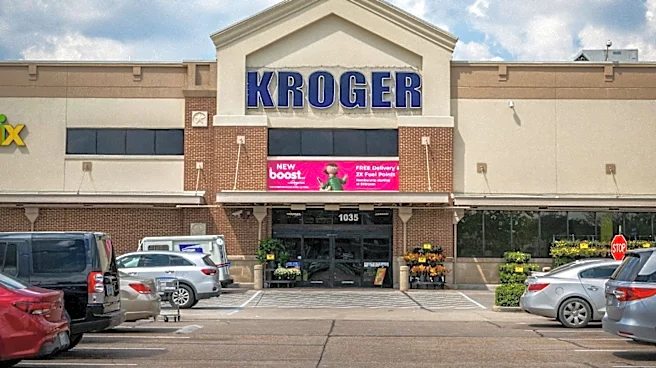
Kroger, the grocery giant, is under increased scrutiny from the Trump administration regarding its H-1B visa filings while simultaneously planning to eliminate thousands of U.S. jobs. The company intends to cut 3,000 corporate roles over the next three
years, representing approximately 37 percent of its corporate workforce. Anthony D'Esposito, the Labor Department's inspector general, highlighted Kroger's planned layoffs and continued H-1B and PERM filings, advocating for aggressive investigation into potential fraud and abuse within foreign labor programs. D'Esposito stated that corporate profits should not justify harming American workers. The H-1B visa program allows employers to temporarily hire foreign workers for specialty occupations, while PERM is a labor-certification process for sponsoring foreign workers for permanent residency. From fiscal years 2021 through 2026, Kroger received approval for 303 H-1B beneficiaries. The federal government has intensified its review of employers utilizing the H-1B program, particularly those that have reduced U.S. jobs. An executive order signed by President Trump in September added recent or planned layoffs as a factor for officials to consider when reviewing H-1B sponsorships.
Why It's Important?
This situation is important because it highlights the ongoing tension between corporate strategies, immigration policies, and the protection of American jobs. The increased scrutiny from the Labor Department signals a more aggressive stance by the federal government on companies that use foreign worker programs while simultaneously laying off U.S. employees. This could set a precedent for how other large corporations manage their workforce and utilize H-1B and PERM visas, potentially influencing their decisions regarding offshoring and domestic job retention. For American workers, particularly those in corporate roles, this development raises concerns about job security and the potential for their positions to be replaced by foreign labor or offshored. For companies like Kroger, the public and governmental pressure could impact their reputation and potentially lead to stricter regulations or investigations into their hiring practices, affecting their operational costs and strategic planning. The broader implication is a re-evaluation of the H-1B program's intent and its impact on the U.S. labor market.
What's Next?
The Labor Department's investigation into alleged fraud and worker exploitation within the H-1B and PERM programs, initiated in July, remains active and could expand to include Kroger's practices. While D'Esposito has not accused Kroger of violating federal law, the ongoing scrutiny suggests that the company's H-1B filings will face heightened review. The Trump administration is also pursuing changes to employment-based visa reviews, with the Department of Homeland Security proposing that USCIS officers review H-1B and other employment-based visa extensions without automatically deferring to previous approvals. This proposed change could affect approximately 208,000 extension applications annually, with H-1B petitions constituting about three-quarters of them. Kroger's restructuring plans, including the expansion of its corporate operations in Bengaluru, India, will likely continue to draw attention. The company's strategy to generate savings by 'moving the work' and utilizing technology, AI, and machine learning in its Bengaluru center will be closely watched for its impact on U.S. employment.
Beyond the Headlines
The situation with Kroger extends beyond immediate job cuts and visa filings, touching upon broader ethical and economic considerations. The debate over 'corporate profits are not a license to screw American workers' underscores a fundamental tension between shareholder value and social responsibility. The practice of offshoring jobs, even under the guise of efficiency and technological advancement, raises questions about corporate loyalty to national workforces. This development could fuel public and political discourse around the ethics of using foreign labor programs while domestic workers face layoffs, potentially leading to increased calls for protectionist labor policies. Furthermore, the increased reliance on technology, artificial intelligence, and machine learning, as cited by Kroger, suggests a long-term shift in corporate operational models that could have profound implications for the future of work in the U.S., irrespective of immigration policies. The case also highlights the evolving role of government oversight in ensuring that immigration programs are not exploited at the expense of American workers.