








What's Happening?
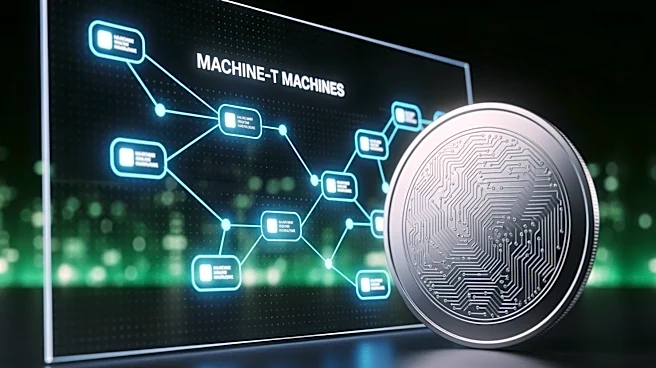
The emergence of stablecoins is set to revolutionize the payments industry by enabling continuous machine-to-machine transactions. Unlike traditional payment systems, which are often slow and costly, stablecoins offer near-instant settlement at a fraction
of the cost. This technology allows devices such as cars, appliances, and industrial robots to transact autonomously, potentially surpassing human transaction volumes. The shift towards automated micro-payments could transform various sectors, including energy, telecommunications, and retail, by enabling real-time pricing and dynamic market responses. However, the current blockchain infrastructure must improve in speed and efficiency to support this new economic activity.
Why It's Important?
The integration of stablecoins into the payments ecosystem could significantly reduce transaction costs for businesses, improving their margins and cash flow. This is particularly impactful for industries where credit card fees are a major expense. The ability for machines to transact autonomously could lead to a more dynamic and efficient economy, with real-time adjustments to supply and demand. Traditional financial intermediaries, such as banks and credit card networks, may face significant disruption as the need for human involvement in transactions diminishes. This shift could lead to a reevaluation of business models across various sectors, potentially reducing inefficiencies and fostering innovation.
What's Next?
For machine-to-machine payments to become mainstream, blockchain technology must evolve to handle high transaction volumes with low latency and cost. Developers and companies focusing on creating efficient payment infrastructures will likely lead this transformation. As more devices become connected and capable of autonomous transactions, industries will need to adapt to this new economic landscape. Stakeholders, including financial institutions and technology developers, will need to collaborate to address the infrastructure challenges and capitalize on the opportunities presented by this shift.
Beyond the Headlines
The rise of machine-to-machine payments could lead to ethical and regulatory considerations, particularly concerning data privacy and security. As devices handle financial transactions autonomously, ensuring the integrity and confidentiality of these transactions will be crucial. Additionally, the shift towards automated payments may raise questions about the future of employment in sectors traditionally reliant on human transaction processing. Long-term, this technological advancement could redefine economic interactions, leading to a more interconnected and automated global economy.