






What's Happening?
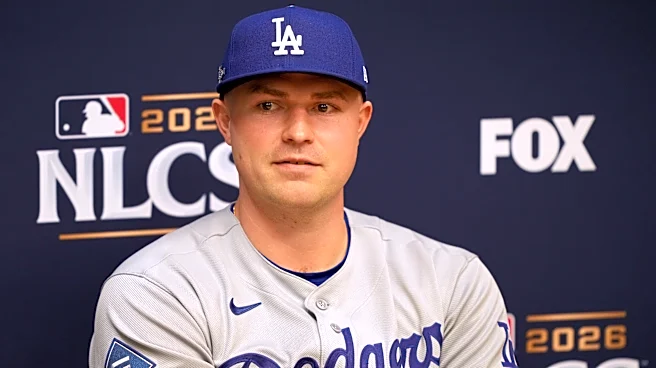
The Los Angeles Dodgers have made significant investments in their bullpen, securing relief pitchers Edwin Diaz and Tanner Scott with substantial multi-year contracts. Diaz signed a three-year, $69 million deal, while Scott was brought in on a four-year,
$72 million contract. These moves indicate a strategic focus by the Dodgers on solidifying the back-end of their pitching staff for the upcoming seasons. The team already has established stability in their bullpen for the 2027 season with these key acquisitions. This aggressive spending on non-closer relief pitchers has raised questions about the team's overall bullpen strategy, especially as other key free agents, such as left-handed reliever Alex Vesia, are drawing significant interest from other teams. The Dodgers' commitment to Diaz and Scott suggests a potential shift in how they allocate resources within their pitching roster, prioritizing high-leverage relief options.
Why It's Important?
The Dodgers' substantial financial commitment to Edwin Diaz and Tanner Scott highlights a growing trend in Major League Baseball where elite relief pitching is increasingly valued. By investing $141 million in these two pitchers, the Dodgers are signaling their belief that a strong bullpen is crucial for championship contention. This strategy could influence other MLB teams to similarly prioritize high-cost relief arms, potentially driving up the market for top-tier relievers. For the Dodgers, these signings aim to provide late-game stability and reduce pressure on their starting rotation. However, this significant investment also impacts their flexibility in other areas, such as retaining other valuable bullpen pieces like Alex Vesia, who may now be out of their price range. The success or failure of these high-stakes bullpen acquisitions will be closely watched and could set a precedent for future team building in the league.
What's Next?
The Dodgers' immediate focus will likely shift to integrating Edwin Diaz and Tanner Scott into their bullpen and defining their roles for the upcoming 2027 season. With these two high-profile relievers secured, the team will need to manage the rest of their bullpen roster, potentially leading to further transactions. The future of other free-agent relievers, such as Alex Vesia, remains uncertain, as the Dodgers' significant spending on Diaz and Scott may limit their ability to re-sign him. Vesia is reportedly drawing heavy interest from more than half the league, including the New York Mets, suggesting he may depart from Los Angeles. Additionally, the Dodgers have other major priorities, including the potential re-signing of two-time Cy Young winner Tarik Skubal, which will further shape their offseason strategy and overall team composition for the next season.
Beyond the Headlines
The Dodgers' aggressive pursuit and signing of Edwin Diaz and Tanner Scott reflect a broader strategic evolution in baseball, where the traditional roles of pitchers are being redefined. The emphasis on high-leverage relief pitchers, even those not designated as closers, indicates a recognition of the critical importance of every inning in close games. This approach could lead to a more fluid bullpen management style, where matchups and situational effectiveness dictate usage rather than rigid roles. Ethically, the substantial contracts for relievers raise questions about player valuation across different positions and the sustainability of such high spending in the long term. Legally, these multi-year, high-value contracts bind the team to significant financial commitments, impacting future payroll flexibility and potentially influencing collective bargaining discussions regarding player salaries and contract structures. Culturally, it reinforces the idea that a championship team is built not just on star hitters and starting pitchers, but on a deep and reliable bullpen.