


What's Happening?
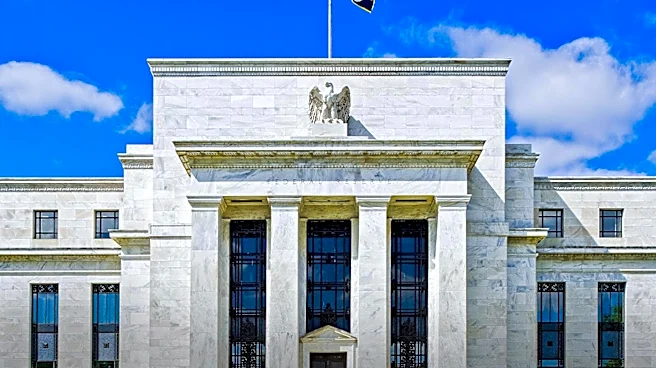
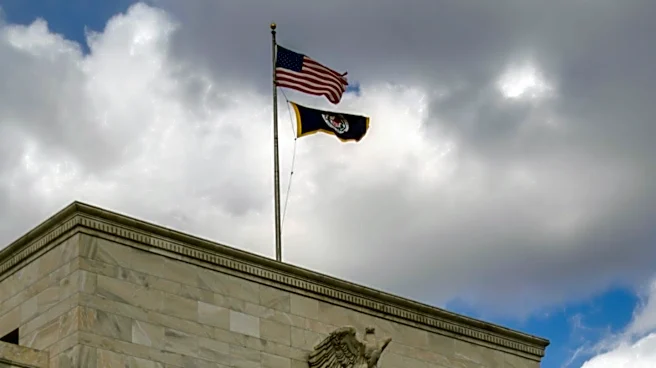
On November 20, 2026, Jim Cramer, host of CNBC's 'Mad Money,' expressed his view on the Federal Reserve's monetary policy, stating that the Fed 'doesn't need to do more than 25' basis points for interest rate hikes. He argued that oil prices are 'embedded'
in the Consumer Price Index (CPI) and are significantly impacting inflation, but noted that oil prices have already begun to cool, with crude falling from approximately $108 to $90 in recent weeks and gasoline prices dropping 12% in a month. Cramer believes that the Fed's actions are already making their point, suggesting that further aggressive hikes might be unnecessary. This perspective contrasts with recent statements from Fed officials, who indicated a need for higher interest rates, with some even suggesting a half-point hike to combat inflation.
Why It's Important?
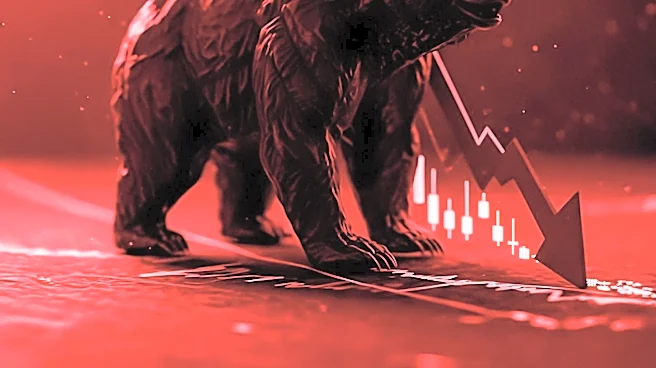
Cramer's commentary highlights a critical debate within economic circles regarding the appropriate pace and magnitude of Federal Reserve interest rate hikes. His argument that falling oil prices are already addressing inflation's 'embedded' component suggests a potential easing of inflationary pressures, which could influence the Fed's decision-making. If the Fed adopts a less aggressive stance, it could have significant implications for the U.S. economy, potentially leading to lower borrowing costs for businesses and consumers, and a more stable stock market. Conversely, if inflation, particularly core PCE which excludes energy, remains elevated, a quarter-point hike might be insufficient, risking prolonged inflation and necessitating more drastic measures later. The outcome of this debate will directly affect economic growth, employment, and the overall financial stability of the nation.
What's Next?
The Federal Reserve's upcoming December meeting will be a focal point for investors and economists, as officials will decide on the next interest rate adjustment. The minutes from recent Fed meetings indicate a leaning towards higher rates, with some governors suggesting more aggressive action. However, if the trend of falling oil prices continues and other inflationary indicators show signs of cooling, Cramer's argument for a smaller 25-basis-point hike might gain traction. Market participants will also be watching for further economic data releases, particularly on inflation and employment, which will provide crucial context for the Fed's decision. The Fed's choice will signal its confidence in current economic trends and its strategy for achieving price stability.
Beyond the Headlines
The discussion around 'embedded' oil prices in the CPI points to the complex and pervasive nature of energy costs throughout the economy. When energy prices rise, they don't just affect gas pumps; they ripple through supply chains, impacting transportation, manufacturing, and food production, making inflation harder to reverse. Cramer's emphasis on this 'embedded' aspect underscores the challenge policymakers face in distinguishing between transient and persistent inflationary pressures. The divergence of opinion between Cramer and some Fed officials also highlights the ongoing uncertainty in economic forecasting and policy formulation in a dynamic global environment. This situation could lead to increased scrutiny of the Fed's communication strategy and its ability to manage market expectations effectively.