








What's Happening?
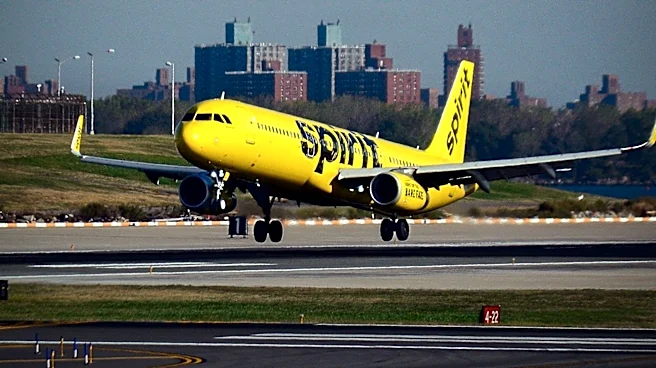
The Federal Aviation Administration (FAA) has granted final approval for JetBlue Airways to acquire 22 takeoff and landing slots at New York's LaGuardia Airport from Spirit Airlines. This transaction, valued at $58.5 million, was secured by JetBlue during
a bankruptcy auction, where it outbid Frontier Airlines. The package includes 12 departure and 10 arrival authorizations, significantly increasing JetBlue's total daily LaGuardia slots from 31 to 53. LaGuardia is classified as a Level 3 airport by the FAA, meaning demand for capacity far exceeds what the airport can reliably handle, making these slots highly valuable. The FAA's approval comes with specific conditions, including a requirement for JetBlue to begin operating flights using these new slots by April 2027 and a prohibition on leasing or trading them to other airlines until after April 2028. This deal allows JetBlue to expand its presence in a highly constrained market.
Why It's Important?
This acquisition is crucial for JetBlue's strategic expansion in the competitive New York market, particularly at LaGuardia, which is a preferred option for business travelers due to its proximity to Manhattan. By securing these slots, JetBlue can offer more options to travelers and intensify competition with larger carriers like Delta Air Lines and American Airlines, which currently dominate the airport. The FAA's decision to approve the transfer, despite objections from rival ultra-low-cost carriers, underscores its belief that increasing JetBlue's relatively small market share at LaGuardia will benefit overall competition. For Spirit Airlines, the sale provides much-needed cash as it navigates Chapter 11 bankruptcy proceedings, highlighting the financial struggles of ultra-low-cost carriers in a challenging economic environment. The high price paid for these slots also reflects the scarcity and strategic importance of access to major metropolitan airports.
What's Next?
JetBlue now has until April 2027 to integrate the newly acquired slots into its operations and begin flying. The airline has indicated that it plans to use this increased capacity to bolster service between the Northeast U.S. and Florida, focusing on key leisure routes, and to expand frequencies on its highest-demand routes out of LaGuardia. JetBlue is currently evaluating its exact fleet and route deployment strategies. The FAA's conditions, particularly the ban on leasing or trading the slots until April 2028, ensure that JetBlue will actively utilize these assets to enhance competition. Travelers using LaGuardia can anticipate expanded JetBlue service in the coming months, with specific route announcements expected as the airline finalizes its schedule updates. For Spirit Airlines, this sale is part of a broader restructuring effort, and further asset sales or network adjustments may occur as it works to emerge from bankruptcy.
Beyond the Headlines
The FAA's approval of JetBlue's slot acquisition at LaGuardia highlights the complex interplay between regulatory oversight, market competition, and airline strategy in highly constrained airport environments. The 'use-it-or-lose-it' rule, a standard FAA policy for slot-controlled airports, is designed to prevent airlines from hoarding valuable capacity. The temporary exemption granted to JetBlue, allowing it more time to implement the new flights, acknowledges the logistical challenges of rapidly expanding operations. This deal also underscores the ongoing consolidation and strategic maneuvering within the U.S. airline industry, where access to prime airport real estate can be a significant barrier to entry and growth. The outcome of this transaction could influence future regulatory decisions regarding slot transfers and the balance between fostering competition and ensuring operational efficiency at congested airports.