


What's Happening?
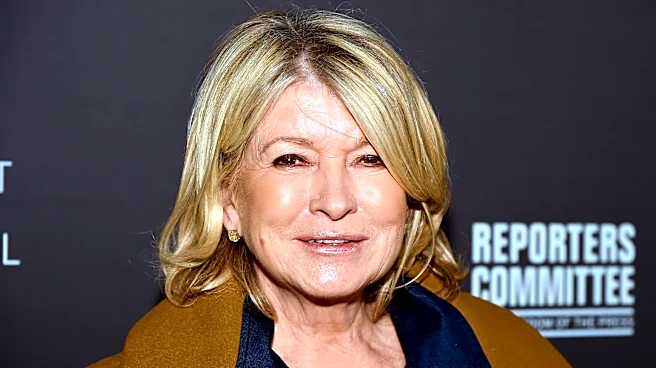
During a segment on the 'Today' show, host Craig Melvin directly questioned Martha Stewart about why he was implicated in the controversy surrounding her Halloween costume. Stewart had posted a photo of herself dressed as a homeless person, holding a sign
that read 'I am hungry. Help Me!' The post drew widespread criticism for its perceived insensitivity, leading Stewart to delete it and issue an apology. In a subsequent public appearance, Stewart attributed her costume choice to Melvin, claiming he had spilled chocolate on the white sweater she had originally planned to wear for Halloween. Melvin pressed Stewart on this, asking why he was 'dragged into it.' Stewart clarified that her comment was a joke, stating she had made a quip about Melvin spilling chocolate on her planned costume during a talk. Melvin then sought and received assurance from Stewart that he was not at fault for the chocolate incident.
Why It's Important?
This incident highlights the immediate and often unforgiving nature of public scrutiny in the digital age, particularly for public figures. Martha Stewart's Halloween costume, intended as humor, quickly became a source of controversy, demonstrating how easily actions can be misinterpreted or deemed insensitive, leading to significant backlash. The subsequent attempt to deflect blame, even if jokingly, further complicated the situation, drawing another public figure into the fray. This event underscores the importance of careful consideration and empathy in public messaging, especially when dealing with sensitive social issues like homelessness. For public figures, it illustrates the need for clear communication and accountability, as missteps can rapidly escalate and impact their public image and relationships with media personalities. It also reflects the broader cultural conversation around humor, privilege, and social responsibility.
What's Next?
While Martha Stewart has apologized and clarified her comments regarding Craig Melvin, the incident serves as a cautionary tale for public figures about the potential for missteps in public statements and social media posts. The immediate future will likely see Stewart and her team exercising greater caution in their public communications, particularly concerning sensitive topics. For Craig Melvin, the on-air clarification has likely resolved his direct involvement in the controversy. The broader conversation about appropriate Halloween costumes and the representation of marginalized communities is expected to continue, with this incident potentially contributing to increased awareness and sensitivity during future holiday seasons. Public figures will likely face ongoing pressure to demonstrate social awareness and avoid content that could be perceived as offensive or tone-deaf.
Beyond the Headlines
The controversy surrounding Martha Stewart's Halloween costume delves into deeper societal issues concerning empathy, privilege, and the commodification of suffering. Dressing as a homeless person, even if intended as satire or humor, can be seen as trivializing the severe realities faced by a vulnerable population. This incident sparks a conversation about the responsibility of those in positions of influence to use their platforms thoughtfully, avoiding actions that could perpetuate stereotypes or diminish the struggles of others. It also touches on the nature of celebrity culture, where personal choices are often amplified and scrutinized, sometimes leading to unintended consequences. The quick public backlash and subsequent apology reflect a growing demand for social consciousness from public figures, indicating a cultural shift towards greater accountability and sensitivity in public discourse.