





What's Happening?
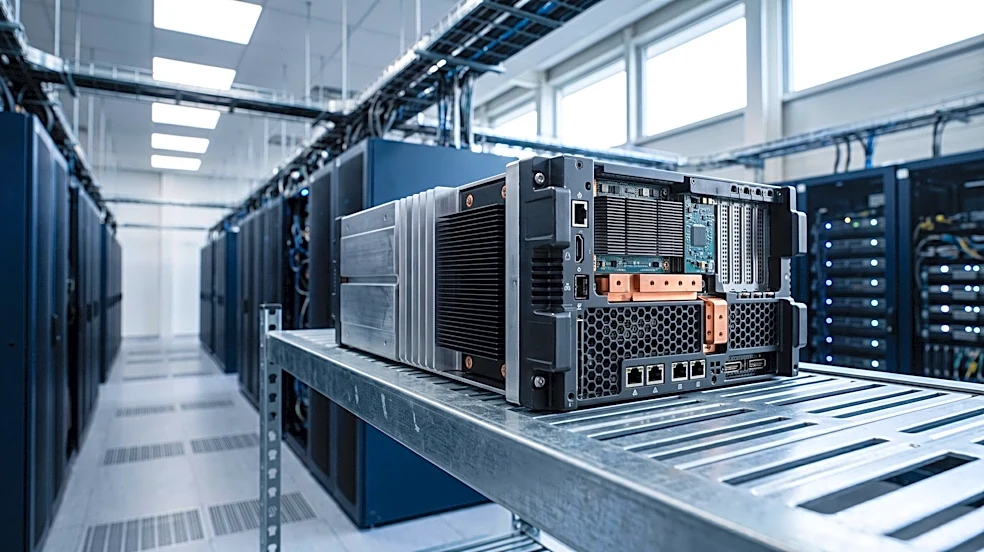
Hewlett Packard Enterprise (HPE) has introduced its AI-focused ProLiant Gen13 server lineup, designed to address next-generation workloads and security requirements. These new AI-ready ProLiant systems are engineered for higher computing efficiency within
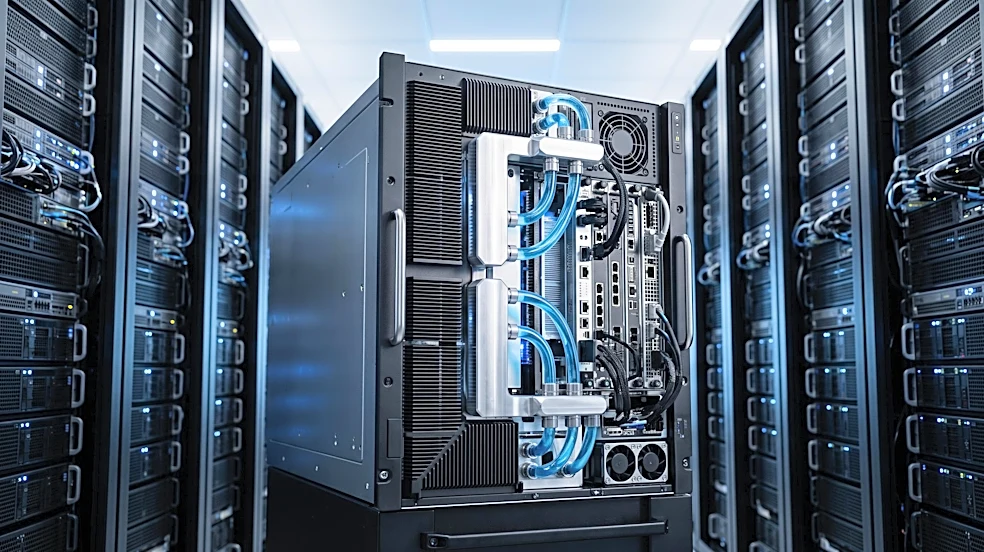
enterprise data centers. In a significant development, Mizuho Securities has selected HPE's direct liquid-cooled Cray XD2000 infrastructure for large-scale financial simulations and complex modeling. This move underscores HPE's strategy to integrate AI-centric networking, data center infrastructure, and cloud services to shift towards higher-margin, recurring revenue streams. The ProLiant Gen13 launch and the Mizuho deal are key components of HPE's evolving AI infrastructure narrative, which aims to provide comprehensive solutions for intensive computing and analytics workloads across U.S. and international markets.
Why It's Important?
HPE's new AI server push is critical for its competitive positioning in the rapidly expanding artificial intelligence market. By offering advanced ProLiant Gen13 servers and liquid-cooled solutions, HPE directly addresses the escalating demand for high-performance computing necessary for AI workloads. This strategy allows HPE to compete effectively with rivals like Dell Technologies and Cisco for complex AI and private cloud contracts, where integrated solutions for dense compute, high-speed fabric, and cooling are essential. The adoption of HPE's Cray XD2000 infrastructure by Mizuho Securities highlights the practical application and trust in HPE's capabilities for demanding financial simulations, demonstrating the real-world impact of these technological advancements on critical industries. This focus on AI-centric offerings is central to HPE's goal of achieving higher-margin, recurring revenue.
What's Next?
HPE will continue to execute its strategy of integrating AI-centric networking, data center infrastructure, and cloud services to drive recurring revenue. The success of the Juniper Networks acquisition and the build-out of AI networking capabilities will be crucial for capturing growth and achieving projected margin targets. The company faces the challenge of converting AI-heavy orders into recognized networking revenue at the anticipated pace, given long deployment timelines and the need for clean integration of Juniper gear. Investors and analysts will closely monitor HPE's ability to overcome these execution gaps, particularly as it competes for large-scale AI and private cloud contracts. Future announcements regarding new partnerships, product developments, and financial results will provide further insight into the effectiveness of HPE's AI server push.
Beyond the Headlines
The introduction of advanced AI servers and liquid cooling solutions by HPE reflects a broader industry shift towards more energy-efficient and powerful computing infrastructure. Liquid cooling, in particular, is becoming increasingly vital as AI workloads generate significant heat, pushing the limits of traditional air-cooling systems. This technological evolution has profound implications for data center design, operational costs, and environmental sustainability. Furthermore, HPE's emphasis on integrated solutions—combining compute, networking, and cooling—suggests a move towards more holistic, 'as-a-service' models in enterprise IT. This could redefine how businesses acquire and manage their IT infrastructure, favoring comprehensive, managed solutions over fragmented component purchases, and potentially accelerating the adoption of AI across various sectors.