
What's Happening?
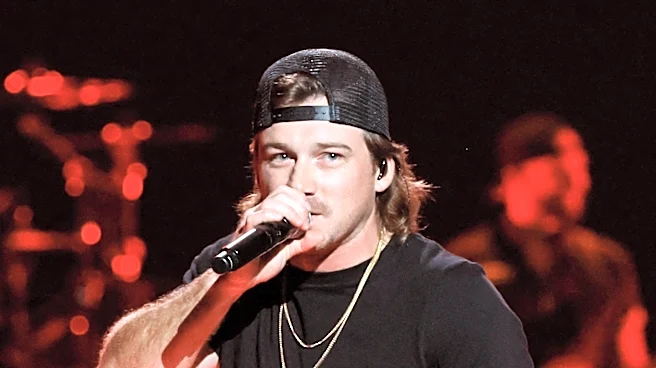
Country music artist HARDY has shared his perspective on how the industry's approach to Morgan Wallen evolved following Wallen's 2021 racial slur incident. According to HARDY, major companies and outlets that initially blacklisted Wallen eventually 'came
to their senses.' He suggests that these platforms realized the immense popularity and talent of Wallen, leading them to reconsider their stance. Wallen's music was initially banned from numerous Country Radio stations and removed from top country playlists on platforms like Apple Music and Spotify. His label, Big Loud Records, suspended him, and he was excluded from country awards shows. HARDY, a frequent collaborator and close friend of Wallen, believes that while the controversy brought heightened notoriety, Wallen's undeniable talent and loyal fanbase were the primary drivers behind his resurgence. Wallen's 2021 album, 'Dangerous,' became the Top Billboard 200 Album of the 21st century, demonstrating his significant appeal even amidst industry backlash.
Why It's Important?
HARDY's comments highlight the complex interplay between artist conduct, public perception, and commercial success within the music industry. The initial widespread condemnation and subsequent reintegration of Morgan Wallen into mainstream country music illustrate the power of fan loyalty and artistic merit in overcoming significant controversies. This situation is important because it reveals how commercial interests can ultimately influence moral stances taken by major platforms and companies. The industry's 'volte-face' suggests that while initial reactions to controversial incidents may be swift and punitive, sustained public demand for an artist's work can lead to a re-evaluation of those decisions. This dynamic impacts how artists navigate public relations, how labels and streaming services manage their rosters, and how awards bodies recognize talent, even when faced with past transgressions. It also underscores the potential for an artist's fanbase to act as a powerful force in shaping their career trajectory, even against institutional resistance.
What's Next?
The ongoing discussion surrounding Morgan Wallen's career trajectory, particularly in light of HARDY's remarks, suggests continued scrutiny of how the country music industry balances commercial success with ethical considerations. While Wallen has re-established himself as one of Country Radio's most successful artists, with each new single often reaching No. 1, his presence in awards shows remains a point of contention. For example, Wallen received only one nomination for the 2026 CMA Awards, for his collaboration with Ella Langley. This indicates that while radio and streaming platforms have largely embraced him, the awards circuit may still be lagging in its full acceptance. Future developments will likely involve observing whether awards bodies fully reintegrate Wallen, and how his continued success influences industry standards for addressing artist controversies. The industry will also be watching how other artists and their teams learn from Wallen's experience regarding managing public image and maintaining fan engagement during challenging times.
Beyond the Headlines
The Morgan Wallen situation, as discussed by HARDY, delves into deeper implications concerning cancel culture, redemption, and the commercialization of art. It raises questions about the permanence of consequences for public figures and whether genuine remorse and continued artistic output can lead to full rehabilitation in the public eye. The 'all publicity is good publicity' adage, while often cynical, appears to have played a role, as the controversy inadvertently amplified Wallen's notoriety. This case also highlights the potential for a disconnect between institutional responses and public sentiment, where a loyal fanbase can effectively circumvent industry gatekeepers. Ethically, it prompts reflection on the criteria for forgiveness and the role of the entertainment industry in setting moral precedents. Culturally, it reflects a broader societal debate about accountability, second chances, and the power dynamics between artists, their audience, and the corporations that distribute their work. The long-term shift could see a greater emphasis on fan engagement and direct artist-to-fan relationships as a buffer against industry-led sanctions.