


What's Happening?
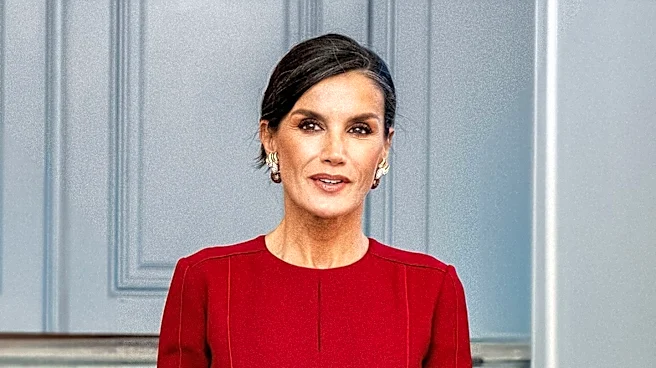
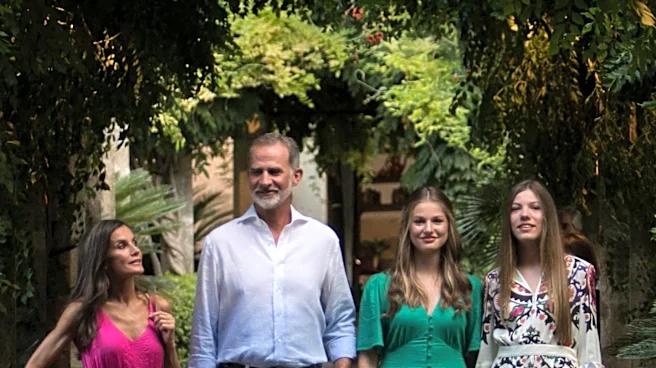
King Felipe VI and Queen Letizia of Spain recently showcased a wine from a small, relatively unknown Spanish winery, Bodega Las Danzas, at a lavish gala dinner held at the Royal Palace of Madrid. The event marked the conclusion of the XXX Ibero-American
Summit, where presidential guests, including Ukraine’s Volodymyr Zelenskyy, were served 'La Media Vuelta,' a white wine priced under €20. This particular wine is produced by winemaker Carmen Martínez, who cultivates just 3.3 hectares of vines in the high-altitude, mountainous terrain of Cangas del Narcea in Asturias. The challenging 'heroic' viticulture in this region necessitates manual labor due to the steep slopes, making machine use impossible. Martínez, who started her winemaking journey in 2019, confirmed that the catering company for the gala informed her of the selection, and she has since observed a notable increase in sales for her Albarín Blanco wine.
Why It's Important?
This royal endorsement carries significant weight for small producers like Bodega Las Danzas, demonstrating that quality and royal approval are not exclusively tied to high price points. For the broader Spanish wine industry, particularly smaller, artisanal wineries, this event highlights the potential for international recognition and increased market access. The exposure at such a high-profile event, attended by heads of state from 22 Ibero-American countries, provides invaluable marketing and credibility. It could inspire consumers to explore lesser-known regions and producers, fostering economic growth in rural areas and promoting sustainable viticulture practices. The 'heroic' viticulture aspect also draws attention to the unique challenges and dedication involved in producing wines from difficult terrains, potentially creating a niche market for such specialized products.
What's Next?
Following the royal endorsement, Bodega Las Danzas can anticipate continued growth in sales and brand recognition, both domestically and potentially internationally. The increased demand may prompt the winery to explore expansion opportunities, though the nature of 'heroic' viticulture might limit rapid scaling. Other small wineries in Spain, especially those employing traditional or challenging viticultural methods, might see this as an opportunity to seek similar high-profile endorsements or to enhance their marketing efforts by emphasizing their unique production stories. The event could also encourage wine enthusiasts and distributors to pay closer attention to emerging regions and producers within Spain, potentially leading to new partnerships and export opportunities. The Ibero-American Summits, which aim to strengthen cooperation among nations, could also indirectly foster trade relationships for products like wine.
Beyond the Headlines
The story of Bodega Las Danzas and its royal recognition extends beyond mere commercial success; it underscores the cultural significance of wine in Spain and the value placed on traditional craftsmanship. In an increasingly globalized market, the emphasis on 'heroic' viticulture and native grape varieties like Albarín Blanco highlights a growing consumer interest in authenticity, terroir, and sustainable practices. This event could contribute to a broader narrative about preserving indigenous winemaking traditions and supporting local economies. It also challenges the perception that luxury and quality are solely defined by price, promoting a more democratic appreciation for fine wines. The involvement of Spanish royals in promoting a local product also reinforces national identity and pride, showcasing Spain's rich agricultural heritage on an international stage.