







What's Happening?
The U.S. economy experienced a significant expansion in the third quarter of 2026, growing at an annualized rate of 3.4%. This marks an acceleration from the 2.2% growth observed in the second quarter, according to the advance estimate released by the Bureau
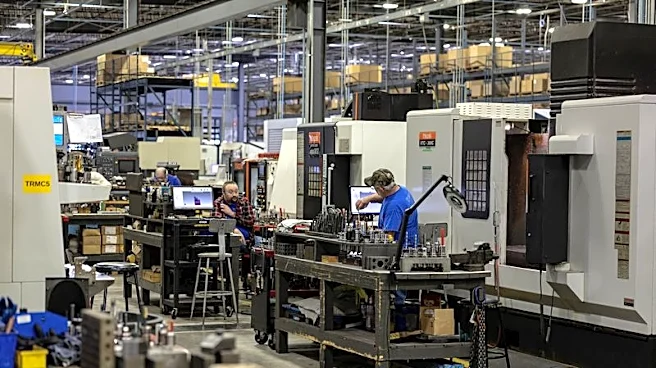
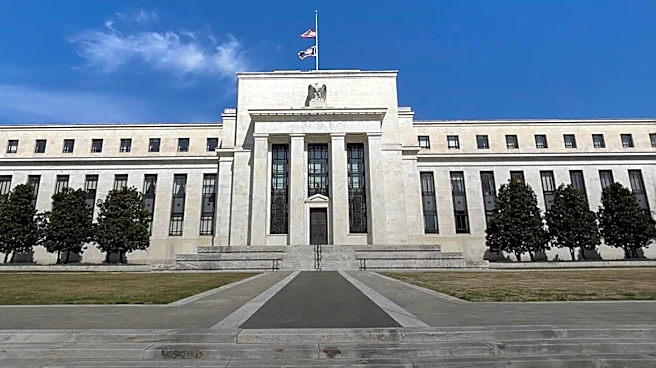
of Economic Analysis. The growth was primarily fueled by stronger business investment and resilient consumer spending, with an upturn in government spending also contributing. Despite this robust economic activity, the Federal Open Market Committee (FOMC) decided to keep its benchmark interest rate unchanged, maintaining the federal funds rate target range at 3.75% to 4.00%. This decision, passed by a 10-2 vote, comes as inflation remains above the Committee’s 2% target, though inflation measures within the GDP report showed moderation. Policymakers noted strong domestic spending, robust capital investment, and job gains keeping pace with workforce growth, with the unemployment rate remaining largely unchanged. Initial unemployment claims also fell to 194,000, indicating contained layoff activity.
Why It's Important?
This economic performance is crucial for the U.S. as it demonstrates continued momentum despite ongoing inflationary pressures and elevated geopolitical uncertainty. The 3.4% growth rate, the fastest in a year, suggests a resilient economy capable of absorbing higher interest rates without a significant slowdown. For businesses, stronger investment and consumer spending signal a favorable operating environment, potentially encouraging further expansion and job creation. The Federal Reserve's decision to hold rates steady, even with inflation above target, indicates a cautious approach, aiming to assess incoming data before making further policy adjustments. This stability in interest rates can provide predictability for financial markets and businesses, though the dissent from two FOMC members preferring a rate hike highlights ongoing debate about the appropriate monetary policy stance. The moderation in inflation measures within the GDP report, with the personal consumption expenditures price index increasing 2.1% compared to 5.0% in the prior quarter, is a positive sign for consumers and could alleviate some cost pressures.
What's Next?
Looking ahead, key economic indicators will provide further insights into the U.S. economy's trajectory. The ISM manufacturing survey and services survey, scheduled for early November, will offer updates on factory activity and the broader services sector, including any shifts in cost pressures. The October employment report, expected later in the week, will be a critical release, with analysts closely watching payroll gains and the unemployment rate. A modest payroll gain alongside a stable unemployment rate would support the Federal Reserve's view that hiring is cooling gradually. The FOMC will continue to monitor these data points to determine the policy stance needed to return inflation to its 2% goal. The ongoing debate within the FOMC, as evidenced by the dissenting votes, suggests that future interest rate decisions will remain data-dependent and potentially contentious, with implications for borrowing costs and economic growth.
Beyond the Headlines
The sustained economic growth, coupled with the Federal Reserve's cautious stance, reflects a delicate balancing act between controlling inflation and supporting economic expansion. The resilience of domestic spending and capital investment, even in an environment of elevated uncertainty, points to underlying strengths in the U.S. economy. However, the persistent inflation above the 2% target suggests that price stability remains a significant challenge. The decline in unemployment claims indicates a robust labor market, which, while positive for workers, could also contribute to wage pressures and make the Fed's inflation fight more complex. The interplay between strong economic activity, moderating inflation, and a stable interest rate environment will be critical in shaping the U.S. economic landscape in the coming quarters, potentially influencing investment decisions, consumer behavior, and the overall financial health of the nation.