
What's Happening?
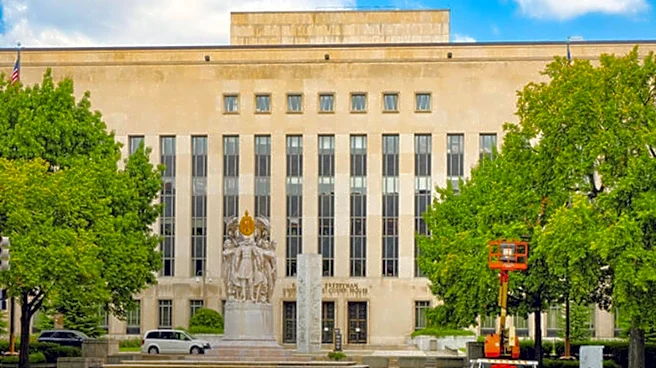
The D.C. Council has approved up to $275 million in bond financing for developer Madrone to convert a former Justice Department building located at 600 E St. NW into a residential complex. This project
will transform the 325,000 square-foot office building, previously vacated by federal agencies, into 415 apartments. Additionally, the ground floor of the redeveloped property will feature a 25,000 square-foot Sprouts Farmers Market. The financing structure mandates that Madrone must repay the funds provided by the District. This initiative is part of a broader trend across U.S. cities to convert vacant office spaces into alternative uses, with New York City, Washington, D.C., Chicago, Los Angeles, and Dallas leading these efforts. The move comes as the office sector's recovery shows mixed signals, with some cities experiencing a slight decrease in office vacancies, prompting landlords to consider holding off on conversions in hopes of attracting new office tenants.
Why It's Important?
This approval signifies a significant step in addressing Washington, D.C.'s housing needs and revitalizing its urban core, particularly the Judiciary Square neighborhood. By converting underutilized office space into residential units, the project aims to increase housing availability and introduce new retail options, fostering a more vibrant mixed-use environment. The substantial bond financing highlights the District's commitment to supporting such adaptive reuse projects, which can stimulate local economies through construction jobs and increased consumer activity. However, the project also underscores the ongoing challenges within the commercial real estate market, particularly the high vacancy rates in office buildings post-pandemic. The financing structure, requiring repayment from the developer, indicates a cautious approach by the District to ensure fiscal responsibility while promoting urban development. The broader trend of office conversions across major U.S. cities reflects a strategic response to evolving urban landscapes and economic pressures, aiming to repurpose assets and create more sustainable urban ecosystems.
What's Next?
Following the D.C. Council's approval, Madrone will proceed with the conversion of the former Justice Department building. The project will involve extensive construction and renovation to transform the office space into residential units and prepare the ground floor for the Sprouts Farmers Market. The success of this project could serve as a model for future office-to-residential conversions in Washington, D.C., and other U.S. cities facing similar challenges with vacant commercial properties. Stakeholders, including local residents, businesses, and urban planners, will closely monitor the project's progress and its impact on the Judiciary Square neighborhood. The ongoing recovery of the office sector will also be a critical factor, as a sustained rebound could influence future decisions by landlords and developers regarding whether to convert properties or seek new office tenants. The District's experience with this financing model will likely inform future public-private partnerships for urban redevelopment.
Beyond the Headlines
The conversion of the Justice Department building into apartments and retail space touches upon several deeper implications beyond immediate economic benefits. Ethically, it represents a sustainable approach to urban development by repurposing existing infrastructure rather than contributing to urban sprawl or new construction, which often has a higher environmental footprint. Legally, the bond financing structure and the repayment terms set a precedent for how public funds can be leveraged to incentivize private development for public good, potentially influencing future policy decisions on urban revitalization. Culturally, the introduction of residential units and a grocery store into a historically government-centric area like Judiciary Square could significantly alter the neighborhood's character, fostering a more diverse and dynamic community. This shift reflects a broader societal trend towards creating more walkable, mixed-use urban environments that cater to the evolving needs of residents, moving away from single-use zoning that often leads to deserted city centers after business hours.