








What's Happening?
U.S. startup Reflect Orbital has signed a contract with the Indian private space company Skyroot Aerospace for two orbital missions. The first mission will utilize Skyroot Aerospace's Vikram-1 rocket, while the second will employ the Vikram-1U, which
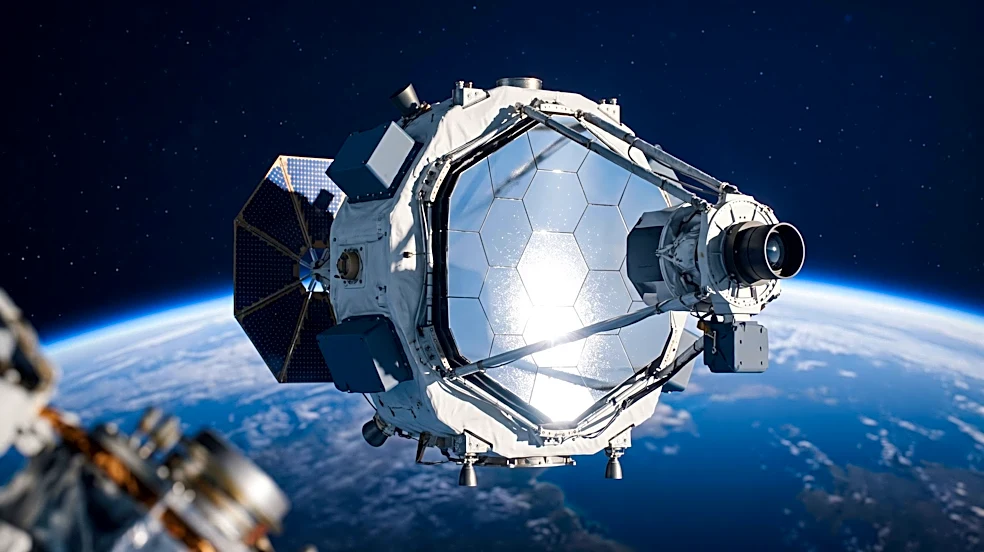
offers a greater payload capacity. The specific launch dates for these missions have not yet been disclosed. Reflect Orbital is developing a constellation of thousands of satellites designed to reflect sunlight directly to the ground using mirrors. The company states that this reflected sunlight can provide clean energy, and has potential applications in industrial sectors, agriculture, search-and-rescue operations, and defense. Additionally, Reflect Orbital suggests the service could enhance urban life by replacing streetlights, reducing light pollution, and illuminating public spaces for events without artificial lighting. This partnership with Skyroot Aerospace comes at a time when launch capacity is reportedly scarce, with Reflect Orbital's Co-Founder and CEO, Ben Nowack, noting the need for new launch providers.
Why It's Important?
This collaboration signifies a growing trend of international partnerships in the commercial space sector, particularly involving U.S. companies leveraging the capabilities of emerging space nations like India. For the U.S. space industry, it highlights the increasing demand for launch services and the diversification of launch providers beyond traditional domestic options. Reflect Orbital's innovative approach to utilizing reflected sunlight for various applications, from clean energy to urban illumination, could introduce new paradigms in space-based services and resource management. The potential for these satellites to reduce reliance on fossil fuels and offer solutions for critical services like search-and-rescue underscores the broader societal and environmental impact. However, the concept has faced backlash from astronomers and environmental activists due to concerns about light pollution and potential interference with astronomical observations, indicating a need for careful consideration of the environmental and scientific implications of such large-scale satellite constellations.
What's Next?
Reflect Orbital plans to deploy 36 reflector satellites by 2027, with an ambitious goal of scaling the constellation to over 35,000 satellites by 2035. The company has already received a license from the Federal Communications Commission (FCC) to launch its first satellite, Eärendil-1, which is scheduled to launch later this year with SpaceX. The timelines for the two missions with Skyroot Aerospace are yet to be announced. Reflect Orbital will need to continue addressing environmental concerns raised by astronomers and activists, potentially through further research and transparent communication regarding the safety and impact of its reflected light technology. The success of these initial missions and the ability to demonstrate the claimed benefits while mitigating negative impacts will be crucial for the company's future growth and the broader acceptance of its technology.
Beyond the Headlines
The development of large-scale satellite constellations like Reflect Orbital's raises profound questions about the future of Earth's orbital environment and its impact on both scientific endeavors and daily life. The concept of illuminating urban areas or agricultural fields from space, while offering potential benefits, also introduces ethical considerations regarding light pollution, the right to natural darkness, and the potential for unintended ecological consequences. The reliance on private companies for such ambitious projects also highlights the evolving role of commercial entities in shaping space exploration and utilization, moving beyond government-led initiatives. This shift necessitates robust regulatory frameworks and international cooperation to ensure responsible development and address potential conflicts of interest between commercial gains and broader scientific or environmental concerns. The debate surrounding Reflect Orbital's technology could serve as a precedent for how future space-based services with significant terrestrial impacts are evaluated and governed.