





What's Happening?
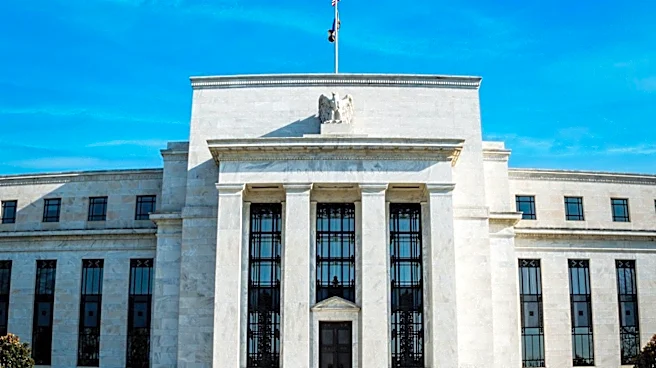
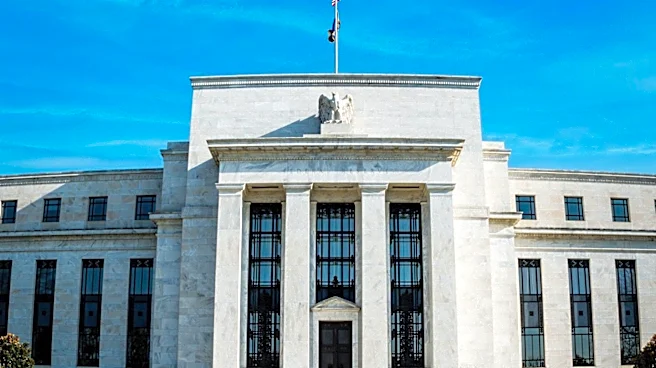
Federal Reserve officials have entered a blackout period, effective from November 28 through December 10, during which they are prohibited from discussing economic conditions or interest rates. This silence precedes the Federal Open Market Committee (FOMC)
meeting scheduled for December 8 and 9. During this period, officials like Governor Michelle Bowman can only address non-policy topics, as she did with a bank-supervision speech on November 25. The market has fully priced in a rate hike for the December meeting, with futures indicating a 100% probability. The current target range for the federal funds rate stands at 3.75% to 4.00%, following a 10-2 vote to hold at the October 28 meeting, where Lisa Cook and Beth Hammack dissented in favor of a quarter-point raise. The November jobs report, due on December 4, will be the final significant economic data release before the FOMC's decision.
Why It's Important?
The Federal Reserve's blackout period and the market's anticipation of a December rate hike carry significant implications for U.S. financial markets and the broader economy. A rate hike, if implemented, would further increase borrowing costs for consumers and businesses, potentially impacting economic growth and investment. The bond market, particularly long-duration Treasuries like the iShares 20+ Year Treasury Bond ETF (TLT), is highly sensitive to interest rate changes. A rise in rates typically leads to a fall in bond prices, affecting investors holding these assets. The Fed's continued focus on combating elevated inflation, as highlighted by October's PCE and core PCE figures, underscores its commitment to price stability, even if it means tighter monetary policy. This environment creates both risks and opportunities for investors, with some economists suggesting that the Fed's hawkishness might be peaking, while others warn of further hikes if inflation persists.
What's Next?
The immediate focus will be on the November jobs report, scheduled for release on December 4, which will provide the last major economic input before the December FOMC meeting. Following the meeting on December 8 and 9, the Federal Reserve will announce its decision on interest rates and release new economic projections, including the Summary of Economic Projections. These projections will offer insights into officials' expectations for interest rates in 2027 and beyond, which will be crucial for long-term bond investors. Market participants will closely analyze the Fed's statement and any accompanying remarks for clues about the future trajectory of monetary policy. The outcome of the December meeting and the subsequent data releases will determine whether the market's current hawkish consensus holds or if there are shifts in expectations regarding the Fed's tightening cycle.
Beyond the Headlines
The ongoing debate within the Federal Reserve regarding the balance between controlling inflation and supporting economic growth highlights a fundamental challenge in monetary policy. The dissent by some governors in favor of a rate hike, even when the majority voted to hold, indicates differing views on the urgency and appropriate pace of tightening. Furthermore, the mention of AI buildout exerting upward pressure on demand and inflation by Vice Chair Philip Jefferson introduces a new dimension to the inflation narrative, suggesting that technological advancements could have unexpected macroeconomic consequences. The impact of these policy decisions extends beyond financial markets, influencing everything from mortgage rates and consumer spending to corporate investment and international capital flows, shaping the economic landscape for years to come.