
What's Happening?
A new analysis by travel insurance marketplace Squaremouth has identified Greenland as the world's most expensive travel destination for 2026. The Arctic destination topped the rankings due to high costs
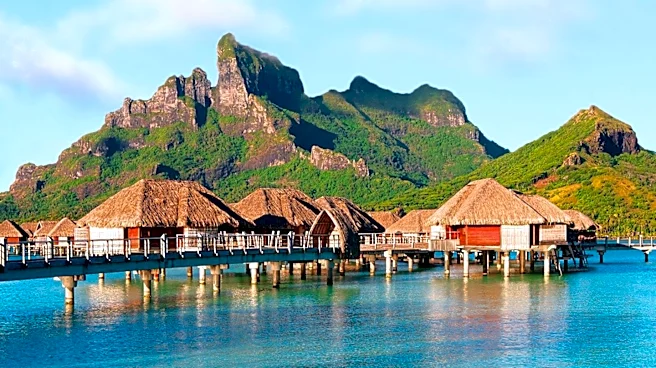
across nearly all categories, with average airfare reaching $1,357 and daily expenses averaging $1,171. Following Greenland, the British Virgin Islands secured the second spot, largely due to exorbitant hotel prices averaging $1,137 per night, contributing to a daily trip cost of $925. French Polynesia ranked third, with some of the highest average hotel prices at $1,382 per night. Antarctica, while ranking fourth overall, had the highest average trip cost per day at $1,511, attributed to the specialized expedition travel required. Other expensive destinations include the Maldives, Switzerland, Zimbabwe, Turks and Caicos Islands, Botswana, Anguilla, Saint Lucia, Namibia, and Iceland. Travel prices globally have increased by nearly 10% over the past year, according to the U.S. Travel Association, making bucket-list trips significantly more costly.
Why It's Important?
The rising costs of international travel, particularly to remote and luxury destinations, have significant implications for the U.S. tourism industry and American travelers. As travel prices climb, the accessibility of certain 'bucket-list' experiences may become limited to a more affluent demographic, potentially shifting travel patterns and preferences among U.S. consumers. The increased expense could lead to a greater focus on domestic travel or more budget-conscious international options. For travel insurance providers like Squaremouth, these trends highlight the growing need for comprehensive coverage as trip costs escalate, making financial protection against unforeseen circumstances more critical. The data also reflects a broader economic trend of inflation impacting leisure activities, which could influence consumer spending habits and the overall health of the travel sector. Destinations that are harder to reach or offer unique, once-in-a-lifetime experiences are commanding premium prices, indicating a strong demand for exclusivity despite the high cost.
What's Next?
Travelers planning trips to these high-cost destinations in 2026 and beyond will need to adjust their budgets and potentially explore new savings strategies. The report suggests that starting a vacation fund, such as through a 52-week savings challenge, could help offset some of these expenses. The continued rise in travel costs may also prompt the travel industry to innovate with more flexible payment options or bundled packages to attract travelers. For destinations, maintaining their appeal despite high prices will depend on the perceived value and unique experiences they offer. The trend of increasing travel expenses is likely to continue, driven by factors such as demand for remote and luxury travel, and broader economic inflation. This could lead to a re-evaluation of travel priorities for many, with a potential shift towards shorter trips or destinations that offer better value. Travel insurance will likely become an even more integral part of trip planning as travelers seek to protect their significant investments.
Beyond the Headlines
The phenomenon of increasingly expensive 'bucket-list' travel points to deeper societal and economic shifts. The desire for unique, often remote, experiences reflects a cultural value placed on exclusivity and personal enrichment, even at a high financial cost. This trend could exacerbate inequalities in leisure travel, making certain parts of the world less accessible to average income earners. Environmentally, the increased travel to remote and fragile ecosystems, such as Greenland and Antarctica, raises questions about sustainable tourism and the ecological footprint of such journeys. The high prices might inadvertently serve as a form of crowd control, limiting the number of visitors and potentially mitigating environmental impact, but this also means that the benefits of tourism are concentrated among fewer, wealthier individuals. The emphasis on 'once-in-a-lifetime' trips also suggests a consumer mindset that prioritizes experiential spending over material goods, a trend that has been growing in recent years.