




What's Happening?
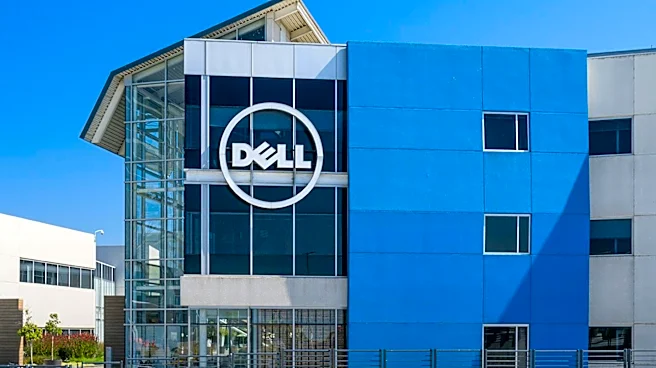
Dell Technologies announced its strongest quarterly revenue on record, reaching $54.94 billion, significantly exceeding analyst expectations of approximately $49.3 billion. This surge represents more than double the revenue reported in the prior-year
quarter. The company's AI-optimized server revenue saw a substantial increase of 291% compared to the same period last year. This growth was a primary driver for the overall company revenue. Adjusted earnings per share also surpassed consensus estimates, reaching $9.45 against an expectation of $6.60. The Infrastructure Solutions Group, which encompasses servers and storage, was a major contributor to this expansion, with its revenue nearly tripling. Dell also reported a record backlog of AI server orders totaling $132.3 billion, with $60.2 billion in new orders booked during the quarter. Over 7,500 customers are now utilizing Dell's integrated solutions for AI model development and inference, indicating a broadening demand beyond major cloud providers to a wider range of enterprise accounts.
Why It's Important?
This performance by Dell Technologies highlights the robust and sustained investment in the physical infrastructure required for artificial intelligence, distinguishing it from more volatile segments of the AI market. The significant increase in AI server demand indicates that enterprises are actively expanding computing capacity, refreshing older systems, and modernizing data centers to support AI applications. This trend suggests a fundamental shift in IT spending, prioritizing hardware that can handle intensive AI workloads. Dell's ability to capture a substantial share of this spending has fundamentally altered its business composition, with infrastructure products now driving the majority of its growth and profit. This also signals confidence in the long-term viability of AI deployment, as companies are making substantial capital expenditures on the underlying hardware, power, and cooling systems necessary for advanced AI models. The broader implications suggest continued growth for hardware providers in the tech sector, even as other AI-related investments face scrutiny.
What's Next?
Dell Technologies has raised its full-year outlook for AI-optimized server sales to $78 billion, up from a previous forecast of $74 billion, and increased its adjusted earnings-per-share guidance to $29.68 from $25.50. This marks the third upward revision to annual forecasts this year, reflecting management's strong confidence in the ongoing conversion of current order momentum into recognized revenue. The company's board has also approved an additional $25 billion authorization for share repurchases, signaling financial strength and a commitment to shareholder returns. The continued expansion of AI infrastructure is expected to drive further demand for Dell's products, particularly as enterprise customers continue their digital transformation and AI integration efforts. This sustained demand could lead to further positive revisions in future financial outlooks and reinforce Dell's position as a key player in the AI hardware ecosystem.
Beyond the Headlines
The strong performance of Dell Technologies underscores a critical divergence within the broader AI investment landscape. While some investors have become more selective regarding AI software and model developers, the demand for foundational hardware remains resilient. This suggests that the practical implementation and scaling of AI technologies are heavily reliant on robust physical infrastructure, creating a stable and growing market for companies like Dell. The shift in Dell's business composition, with infrastructure products now generating the majority of its growth and profit, indicates a long-term strategic advantage in providing essential components for the AI revolution. This trend also highlights the increasing importance of integrated solutions that combine servers, storage, networking, and software, pushing hardware providers to offer more comprehensive and tailored offerings to meet complex AI demands. The sustained investment in AI infrastructure could also drive innovation in related fields such as power management and cooling systems, as the energy demands of AI workloads continue to grow.