





What's Happening?
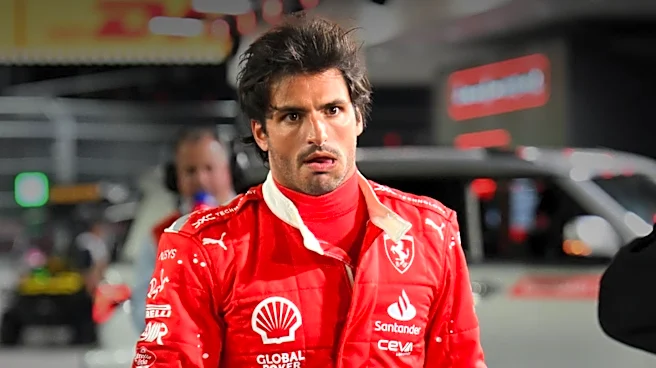
Carlos Sainz Jr., a prominent Formula One driver, pursued a direct path into professional racing after completing his secondary education at SEK-El Castillo International School in Madrid. Unlike many who pursue higher education, Sainz Jr. transitioned
from school directly into full-time racing, beginning karting at age six, competing internationally in his early teens, and entering single-seater racing by 17. This educational trajectory is common among elite F1 drivers, where early talent identification often necessitates leaving traditional schooling for dedicated racing careers. His bilingual education at SEK-El Castillo provided him with fluent English, a skill frequently utilized in paddock interviews. Sainz Jr.'s father, Carlos Sainz Sr., a two-time World Rally Champion, also forewent a full university degree, dropping out of law school to focus on his rallying career, indicating a family precedent for prioritizing racing over academic pursuits.
Why It's Important?
This trend among Formula One drivers, exemplified by Carlos Sainz Jr., highlights a significant divergence from conventional career paths, underscoring the unique demands and early specialization required for success in elite motorsports. The decision to forgo university education reflects the intense competitive nature of F1, where early and continuous training is paramount. This approach shapes the professional development of athletes in high-stakes sports, emphasizing practical experience and skill development over academic credentials. For aspiring young athletes, Sainz Jr.'s trajectory serves as a model, illustrating that a direct entry into professional sports can be a viable and successful route. It also raises questions about the broader societal value placed on traditional education versus specialized vocational training in fields demanding exceptional talent and dedication from a young age.
What's Next?
As Carlos Sainz Jr. continues his career in Formula One, his focus will remain on competitive racing, team performance, and personal development within the sport. His educational background, while non-traditional, has not hindered his professional success, suggesting that future F1 aspirants may continue to follow similar paths. The sport's infrastructure, including driver academies run by major teams like Ferrari, Red Bull, and Mercedes, is designed to scout, fund, and train talent from early karting stages, further solidifying the trend of early specialization. This system makes skipping traditional education a competitive default rather than an exception, indicating that future generations of F1 drivers are likely to prioritize track time and professional development over university degrees.
Beyond the Headlines
The educational choices of athletes like Carlos Sainz Jr. reflect a broader societal shift in how talent is nurtured and professional careers are forged in highly specialized fields. This model challenges the traditional perception that a university degree is a prerequisite for success, particularly in domains where innate talent, rigorous training, and early exposure are critical. The emphasis on practical, real-world experience from a young age in F1 could influence other industries to re-evaluate their talent development pipelines. Furthermore, it highlights the increasing professionalization of youth sports, where the pursuit of excellence often begins before adulthood, potentially impacting the holistic development of young individuals who commit to such demanding careers. The long-term implications include a potential redefinition of 'education' to encompass specialized, experiential learning alongside traditional academic routes.