



What's Happening?
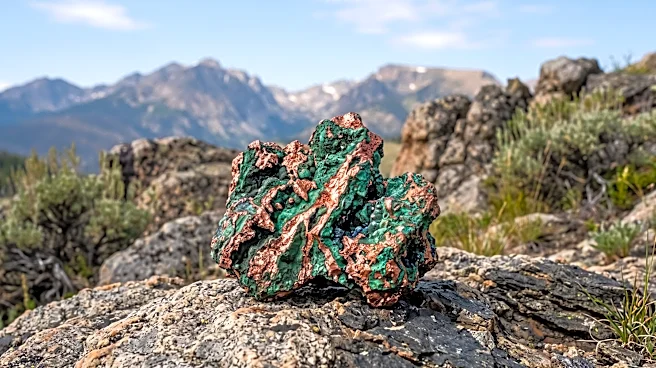
Red Mountain Mining (ASX:RMX) has reported the discovery of high-grade copper at its Pioneer Tungsten Project located in Montana, U.S. Rock chip samples from the project have shown copper concentrations of up to 19.15%. A desktop study identified higher
copper values at the Glow Worm prospect, the northern part of Greenstone, and the Mammoth prospect. Historical artisanal mining in Mammoth during the early 20th century recorded minor copper, silver, and gold production. Specifically, samples returned copper grades of up to 6.72% at Greenstone and 3.97% at Glow Worm, with these higher values spatially linked to mapped garnet skarn. Out of 195 rock chip samples collected across the project, 37 exhibited copper grades exceeding 0.1%. The Pioneer Project is situated within southwestern Montana's copper province, associated with Late Cretaceous granitic batholiths, including the Pioneer Batholith. Tungsten mineralization has also been confirmed across all four Pioneer prospects, with maximum rock chip results of 0.55% tungsten trioxide (WO3) at Greenstone, 0.40% WO3 at Glow Worm, 0.32% WO3 at Lost Creek, and 0.29% WO3 at Mammoth.
Why It's Important?
This discovery by Red Mountain Mining is significant for the U.S. mining industry, particularly in Montana, as it indicates a potentially valuable new source of copper. Copper is a critical mineral with increasing demand in various sectors, including renewable energy technologies, electric vehicles, and electronics. The presence of high-grade copper alongside existing tungsten mineralization could enhance the economic viability of the Pioneer Project, attracting further investment and development in the region. For Red Mountain Mining, this finding diversifies its portfolio beyond tungsten and could lead to substantial revenue streams. The historical production records of copper in the area, though small-scale, lend credence to the potential for larger deposits. The project's location within a known copper province, near major copper systems like the Butte deposits, further underscores its strategic importance. This development could contribute to strengthening the domestic supply chain for critical minerals, reducing reliance on foreign sources, and supporting U.S. industrial growth.
What's Next?
Red Mountain Mining is currently finalizing plans for expanded mapping and sampling activities across the Pioneer Project, with a focus on both copper and tungsten. Following the completion of surface sampling, the company intends to prioritize specific targets for drill testing. This drilling program is anticipated to commence in the 2027 Northern Hemisphere field season. The results from these upcoming exploration phases will be crucial in determining the full extent and economic feasibility of the copper and tungsten deposits. Successful drill testing could lead to further resource delineation, feasibility studies, and eventually, the development of mining operations. Major stakeholders, including investors and local communities in Montana, will be closely watching these developments, as a successful project could bring economic benefits through job creation and local investment. The company's progress will also be of interest to the broader critical minerals sector, as it could signal new opportunities for resource development in the U.S.
Beyond the Headlines
The discovery of high-grade copper at the Pioneer Project has broader implications beyond immediate economic gains. It highlights the ongoing importance of geological exploration in identifying new domestic sources of critical minerals, which are essential for national security and technological advancement. The project's location in Montana, a state with a rich mining history, could reignite interest in exploring other historically productive but currently underexplored areas. Environmentally, any future mining operations will need to navigate stringent regulations, balancing resource extraction with ecological preservation, especially given the project's association with natural geological formations. Ethically, the development of such projects often involves engagement with local communities and indigenous groups, ensuring fair practices and sustainable development. This discovery also contributes to the global conversation around resource independence and the strategic importance of securing domestic supplies of key industrial metals in an increasingly competitive international landscape.