






What's Happening?
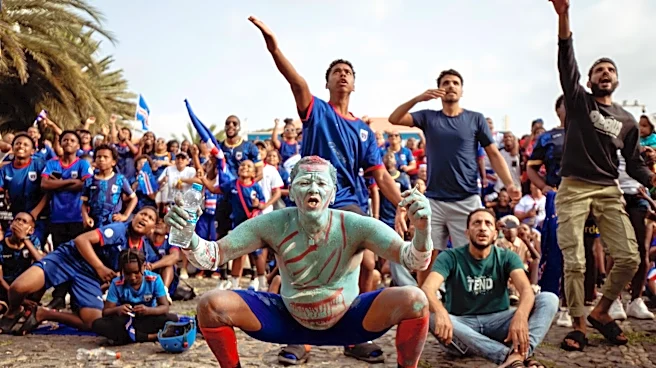
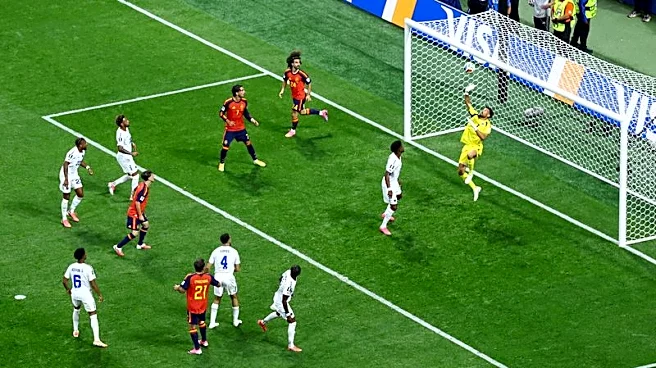
Cape Verde, a debutant in the expanded World Cup, achieved a significant milestone by holding the defending European Champions, Spain, to a scoreless draw. This match, which took place amidst a series of draws on the same day, was particularly notable
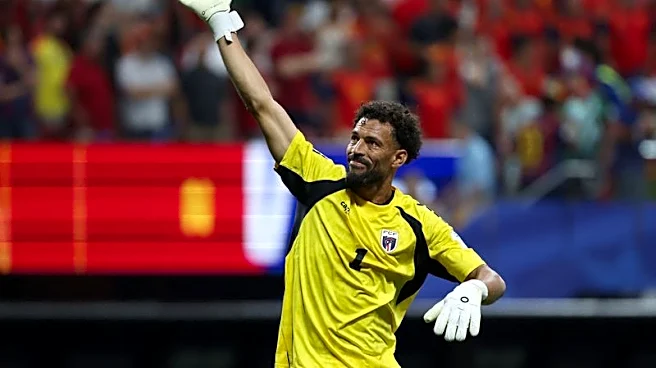
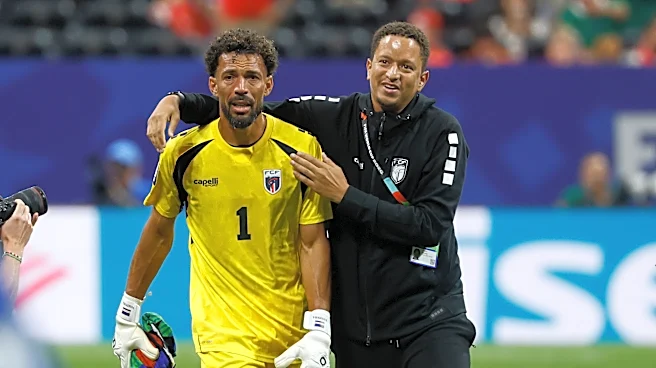
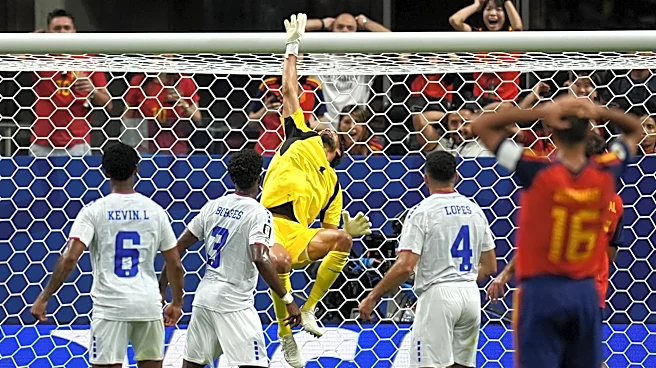
due to the vast ranking gap between the two teams. Spain, ranked second in the world, faced off against Cape Verde, ranked 67th, marking one of the largest ranking disparities in World Cup history where the lower-ranked team avoided defeat. Cape Verde's goalkeeper, Vozinha, played a crucial role in the match, making several key saves. Despite Spain's attempts, including hitting the crossbar, they were unable to break through Cape Verde's defense.
Why It's Important?
This result is significant as it highlights the unpredictable nature of the World Cup and the potential for underdog teams to challenge established football powerhouses. For Cape Verde, this draw is a historic achievement that could boost the team's confidence and visibility on the international stage. For Spain, the match underscores ongoing challenges in converting possession into goals, a recurring issue in their recent performances. The outcome may prompt a reassessment of strategies and player utilization as Spain progresses in the tournament. This match also adds to the narrative of smaller nations making impactful appearances in global sports events, potentially inspiring other underrepresented teams.
What's Next?
Following this match, Cape Verde will look to build on their momentum in their upcoming World Cup fixtures. The team will likely focus on maintaining their defensive strength while seeking opportunities to capitalize on counterattacks. For Spain, the draw serves as a wake-up call to address tactical inefficiencies and improve their offensive execution. Both teams will continue to compete in the group stage, with Cape Verde aiming to secure further points and Spain striving to regain their form and advance to the knockout rounds.