







What's Happening?
Chinese electric vehicle (EV) manufacturers are significantly outpacing their U.S. counterparts in overseas investments, according to a report by CNBC. Chinese companies have announced nearly $101 billion in EV and battery investments abroad from 2019
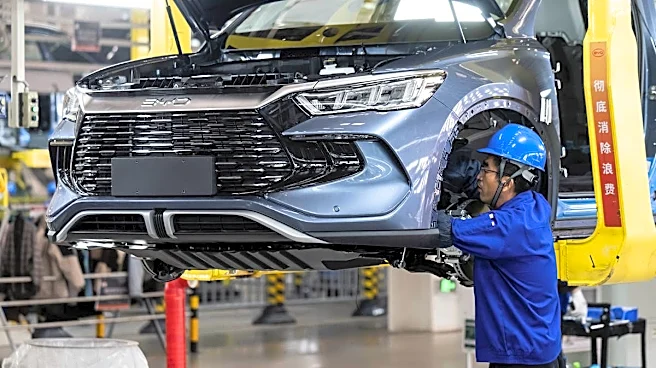
to 2025, compared to just over $38 billion by U.S. companies. This expansion is part of China's strategy to escape its saturated domestic market and avoid import tariffs in other countries. Analysts suggest that Chinese automakers, such as BYD, are becoming dominant players in the global EV market, benefiting from extensive global supply chains and long-term investments. The shift in investment patterns marks a generational change in trade dynamics, with Chinese companies increasingly establishing a strong presence in major markets worldwide.
Why It's Important?
The aggressive global expansion of Chinese EV manufacturers poses a competitive challenge to U.S. automakers, potentially impacting their market share and influence in the global automotive industry. As Chinese companies establish factories and supply chains in key markets, they gain a competitive edge in terms of cost efficiency and market access. This trend could lead to a shift in the balance of power within the automotive sector, with Chinese firms emerging as leaders in the EV space. For the U.S., this development underscores the need to enhance its own investment strategies and address trade barriers to remain competitive in the rapidly evolving global market.
What's Next?
As Chinese EV manufacturers continue to expand their global footprint, U.S. automakers may need to reassess their strategies to maintain competitiveness. This could involve increasing overseas investments, forming strategic partnerships, and advocating for favorable trade policies. Additionally, the U.S. government may consider implementing measures to support domestic automakers and encourage innovation in the EV sector. The evolving landscape presents both challenges and opportunities for stakeholders in the automotive industry, as they navigate the complexities of global trade and investment.