






What's Happening?
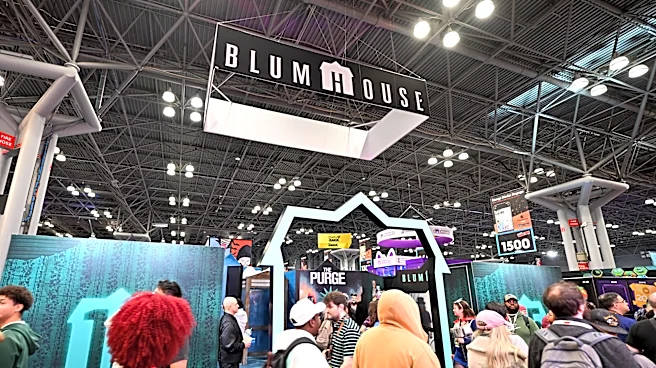
Blumhouse Productions and Atomic Monster, now operating under a shared corporate umbrella as Blumhouse Atomic, recently held an industry gathering in Los Angeles to discuss their future direction and upcoming projects. CEO and president Jason Blum, Atomic Monster founder
James Wan, and Blumhouse Atomic President Abhijay Prakash addressed questions regarding the merger, emphasizing that it is primarily an administrative decision rather than a creative restructuring. Both production labels will maintain their individual identities, with projects continuing to be developed under either the Blumhouse or Atomic Monster brand. The company has seen significant box office success, with films like 'Obsession' and 'Backrooms' achieving high returns on investment. Horror film theatrical attendance in 2026 reportedly rose 7% from pre-pandemic levels, contrasting with a decrease in other genres. Blum attributes this to audiences seeking 'collective experiences' post-quarantine, viewing horror as a participatory event akin to concerts or sporting events.
Why It's Important?
The continued success and strategic merger of Blumhouse and Atomic Monster highlight a significant trend in the U.S. entertainment industry, particularly within the horror genre. Their business model, focused on high return on investment, demonstrates a viable path for film production companies in a competitive market. The observation that horror film attendance is increasing while other genres decline suggests a shift in audience preferences and consumption habits, potentially influencing future investment and production strategies across Hollywood. This trend could lead to more studios prioritizing horror projects, impacting job creation for filmmakers, actors, and crew within the genre. Furthermore, the emphasis on 'collective experiences' post-pandemic underscores the enduring value of theatrical releases for certain film types, challenging the narrative that streaming services will entirely replace traditional cinema. The merger's administrative nature, while maintaining distinct creative identities, could serve as a blueprint for other production companies seeking operational efficiencies without sacrificing artistic autonomy.
What's Next?
Blumhouse Atomic has outlined an ambitious theatrical slate for 2027, featuring 10 films for wide release. Seven of these projects are from 'emerging voices,' with three marking feature directorial debuts. Notable titles include 'River' (January 15), 'The Revenge of La Llarona' (February 26), 'Exorcist: Martyrs' (March 12), 'Play House' (April 2), 'Anything But Ghosts' (May 7), 'Molepeople' (August 27), 'Blair Witch' (September 24), 'Sleepover' (October 8), 'Paranormal Activity' (October 22), and 'Seasons' (November 12). The company also plans to revisit established horror franchises like 'Blair Witch' and 'Paranormal Activity,' with a 'Saw' film directed by Mike P. Nelson slated for 2028. While the company emphasizes efforts to ensure directors reflect their audience, a journalist noted the absence of women and Black directors among the 'emerging voices' for the 2027 wide release slate, despite Blum's acknowledgment of the importance of diverse representation.
Beyond the Headlines
The discussion around Blumhouse Atomic's 2027 slate reveals a deeper conversation about diversity and representation within the film industry. While the company states its commitment to ensuring directors reflect their audience, the current lineup for wide theatrical releases raises questions about the practical implementation of these goals, particularly concerning women and Black directors. This disparity highlights a persistent challenge in Hollywood, where opportunities for marginalized voices, especially in high-profile theatrical releases, remain limited. The company's recent deal with content creator Heidi Wong for a short film, while a positive step, contrasts with the lack of female-directed features in the upcoming wide release schedule. This situation could spark further dialogue and pressure from advocacy groups and audiences for greater inclusivity in directorial roles, potentially influencing future hiring practices and development pipelines across the industry. The continued success of horror, often seen as a genre more open to new talent, also presents an opportunity for it to lead in fostering a more diverse filmmaking landscape.