



What's Happening?
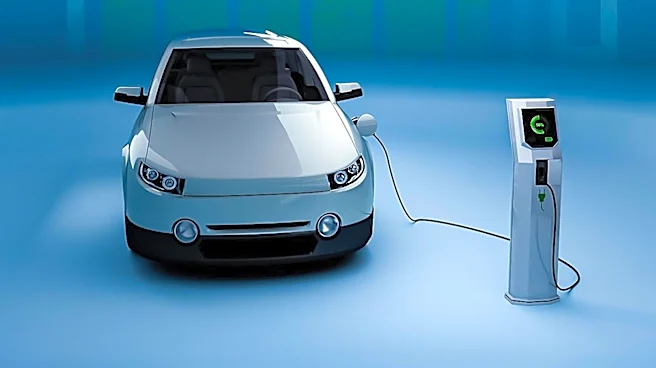
Automakers are increasingly marketing electric vehicles (EVs) and hybrids as potential home backup power sources in response to a slowdown in EV sales growth. Companies like Ford, Kia, Tesla, and GM are developing systems that allow their vehicles to power homes
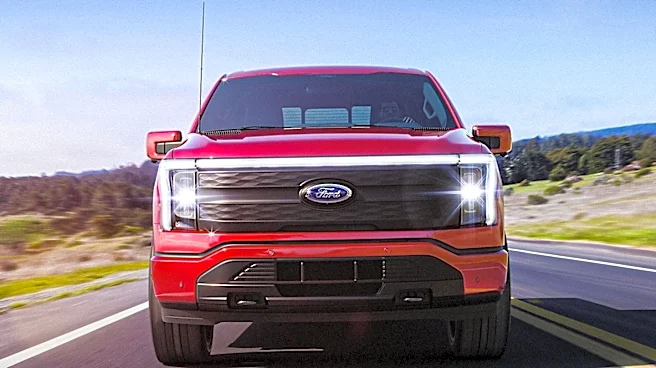
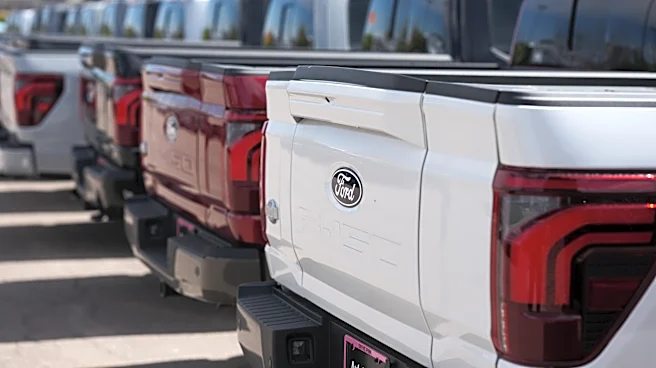
during outages. For instance, Ford's F-150 PowerBoost hybrid and Lightning models can connect to home electric meters to power select circuits for several days. This initiative comes as EV sales have decreased by 23.8% year-over-year in the first half of 2026, while grid demand continues to rise. The move offers a new business angle for automakers, leveraging their EV investments beyond traditional car sales.
Why It's Important?
This development highlights a strategic pivot by automakers to enhance the value proposition of EVs amid a challenging sales environment. By positioning EVs as dual-purpose vehicles that can also serve as emergency power sources, automakers aim to attract consumers who are increasingly concerned about energy reliability. This approach could potentially increase EV adoption by offering additional utility and cost savings to consumers. However, challenges such as safety certification, utility approval, and consumer education on managing new power sources remain significant hurdles. The success of this strategy could influence future automotive and energy market dynamics, potentially leading to broader adoption of vehicle-to-home and vehicle-to-grid technologies.
What's Next?
As automakers continue to develop and promote these capabilities, regulatory and infrastructure developments will be crucial. Utility companies and regulators will need to establish standards and streamline approval processes for vehicle-to-home connections. Additionally, consumer education campaigns will be necessary to ensure safe and effective use of these systems. Industry experts anticipate that as these technologies become more mainstream, they will drive further innovation in both the automotive and energy sectors, potentially leading to new business models and partnerships.