


What's Happening?
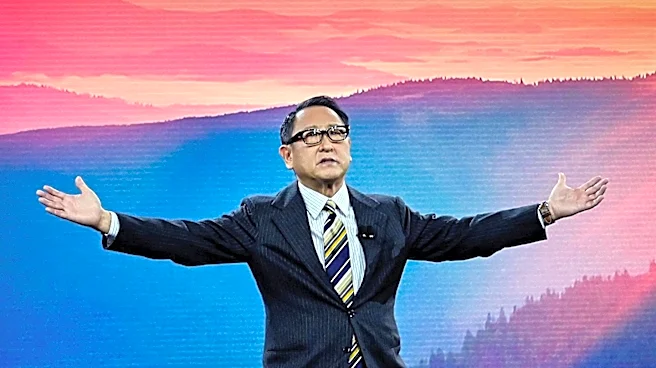
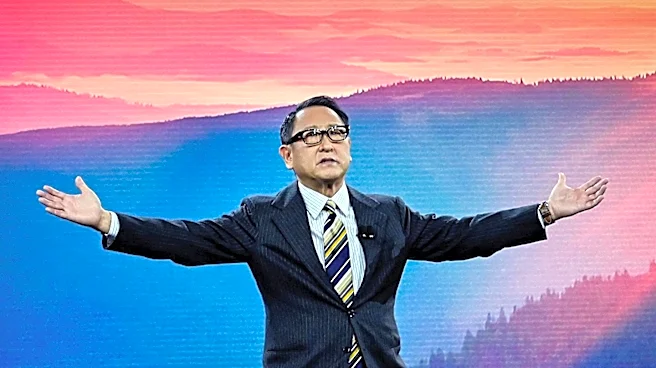
Toyota Chairman Akio Toyoda recently voiced his significant apprehension regarding the automotive industry's widespread transition to Battery Electric Vehicles (BEVs). In a discussion with British automotive journalist Mat Watson from Carwow on June 8,
2026, Toyoda stated that the industry's collective shift to BEVs is his 'biggest fear.' His concerns extend beyond the technological aspects of BEVs, deeply rooted in a personal attachment to traditional internal combustion engines. Toyoda highlighted his past advocacy for combustion engines, recalling how he felt isolated in expressing his love for the smell, sound, and the preservation of jobs for engine suppliers. He emphasized that his passion for cars is not solely driven by carbon neutrality goals or profit generation, but by the belief that cars should evoke passion and enjoyment, a sentiment he feels is challenged by the rapid move towards BEVs.
Why It's Important?
Akio Toyoda's statements are significant as they come from the chairman of one of the world's largest automakers, Toyota, which has historically pursued a diversified approach to powertrain technologies, including hybrids and hydrogen, alongside BEVs. His public expression of fear underscores the profound challenges and emotional attachments within the automotive industry as it navigates a monumental shift. This perspective highlights potential resistance or at least a cautious approach from established players towards an all-electric future, which could influence investment strategies, product development timelines, and lobbying efforts within the U.S. and global automotive markets. For consumers, it signals ongoing debate and potential variations in vehicle offerings as manufacturers weigh different paths to carbon neutrality, impacting choices and the pace of EV adoption.
What's Next?
The automotive industry is likely to continue its trajectory towards electrification, driven by global regulatory pressures and evolving consumer preferences. However, Toyoda's sentiments suggest that companies like Toyota may continue to invest in and advocate for a multi-pathway approach to carbon neutrality, potentially including advanced internal combustion engines, hybrids, and hydrogen fuel cell technologies, alongside BEVs. This could lead to ongoing debates within industry forums and policy discussions regarding the optimal strategies for decarbonization. Stakeholders, including policymakers, environmental groups, and other automotive manufacturers, will likely monitor Toyota's future product portfolio and strategic announcements closely to understand the practical implications of these expressed concerns on the broader market and technological landscape.
Beyond the Headlines
Toyoda's remarks delve into the deeper cultural and economic implications of the automotive industry's transformation. His concern for 'keeping jobs for engine suppliers' highlights the significant socio-economic impact of phasing out traditional powertrains, affecting a vast ecosystem of manufacturers, engineers, and skilled laborers. This perspective brings to light the human element of industrial transitions, where technological advancement can lead to job displacement and the obsolescence of long-standing expertise. Furthermore, his emphasis on cars as machines that 'inspire passion and enjoyment' rather than just tools for carbon neutrality or profit, touches upon the emotional and cultural connection many have with automobiles, suggesting that the shift to BEVs is not merely a technical change but a redefinition of automotive identity and consumer experience.